Note Value Cup-Stacking

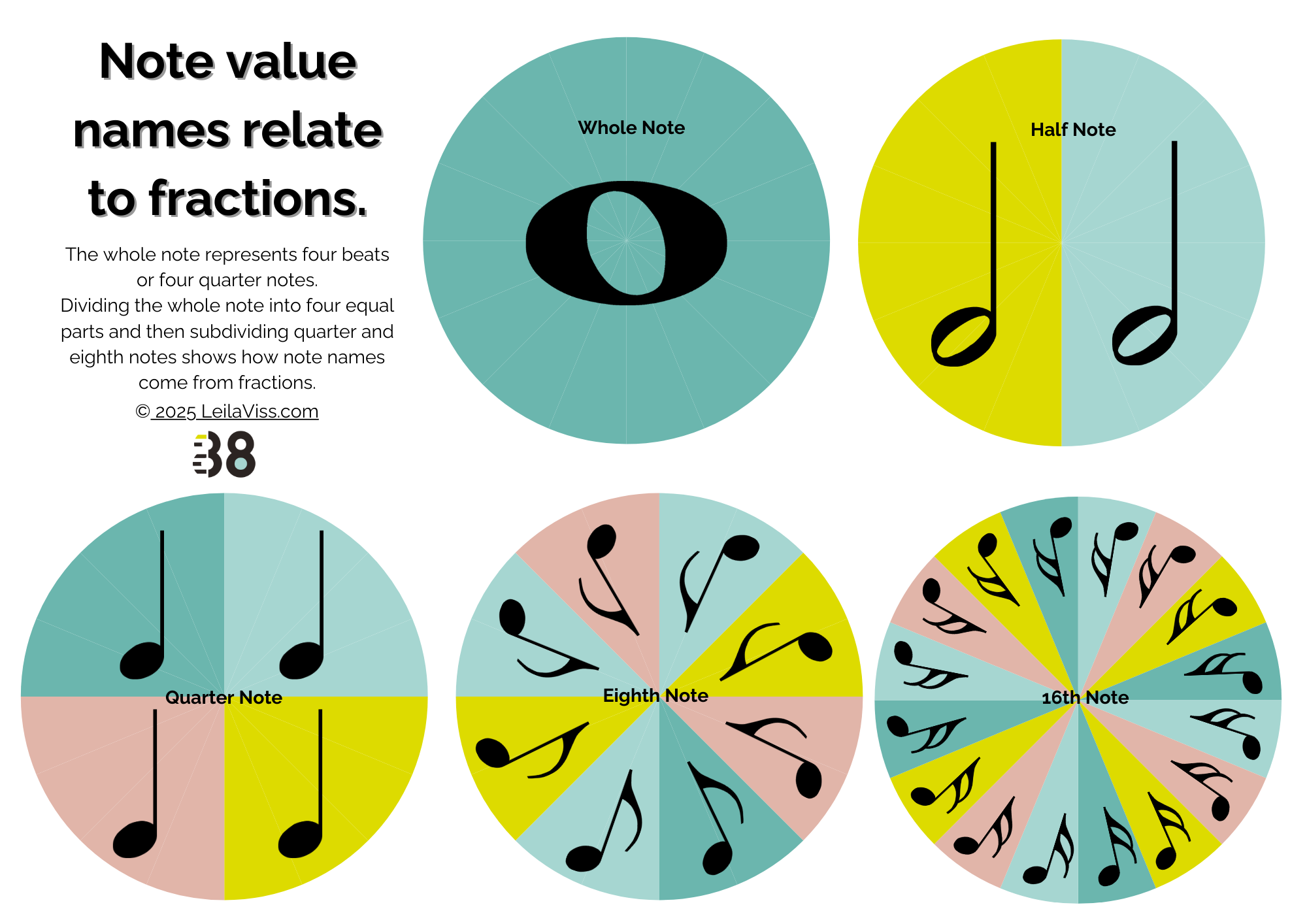
The term quarter note derives from dividing a whole note into four parts.

That makes sense in 4/4 time, where each measure has four beats. But as you know, NOT EVERY piece we play or listen to is in 4/4 time.
Yet, the names of the note values remain the same, even in 3/4 time. Shouldn’t a quarter note be called a third note?
It’s confusing!
So…I created a cup-stacking activity to help students understand the “math” behind note value names.
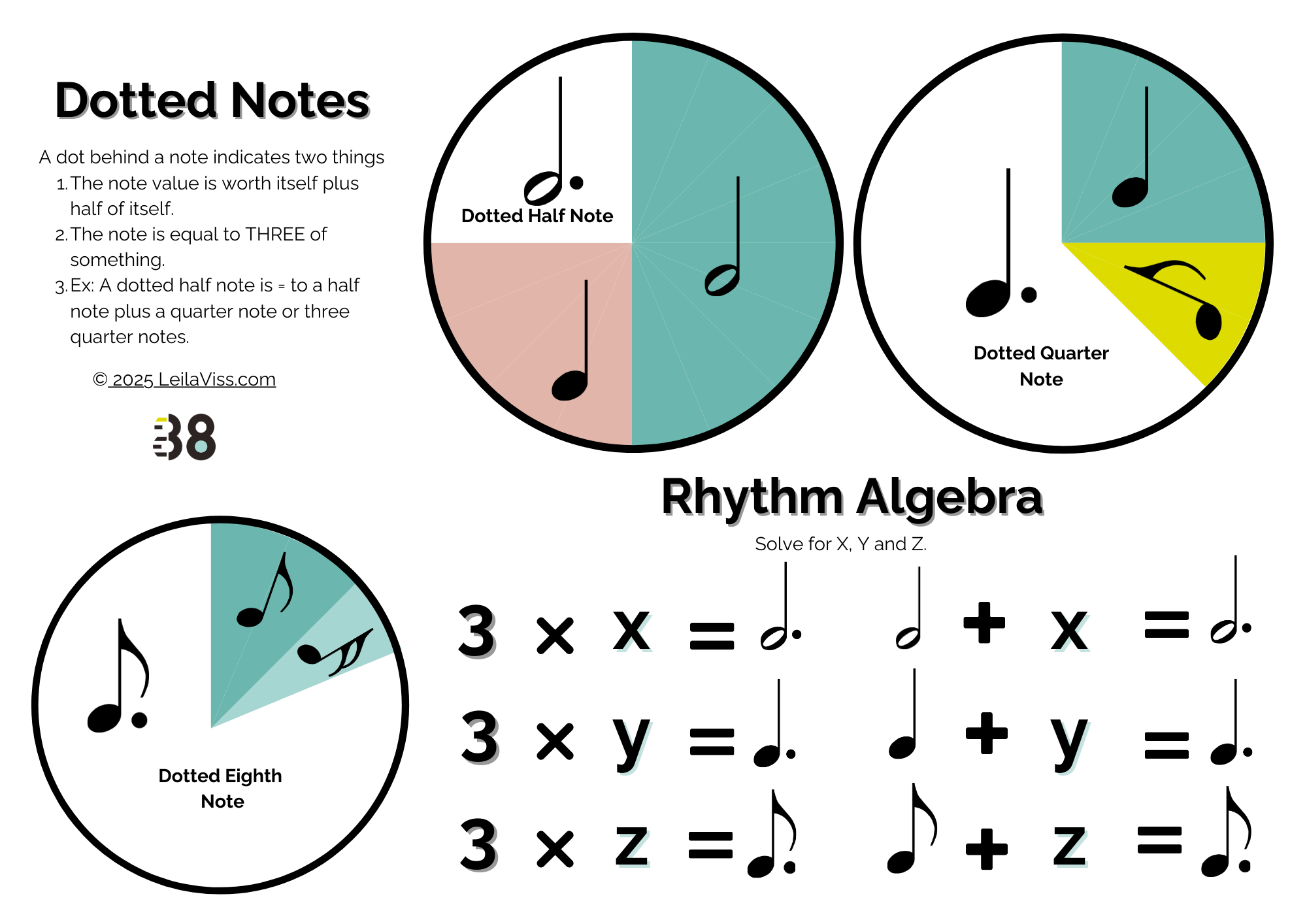
As students look at the pyramid, I explain the relationship between note values with paper plates. This helps rhythm readers correlate note values to fractions, explains the sophisticated term subdivision, and reinforces what the dot indicates on dotted notes.
The FREE download includes this colorful visual for explaining dotted notes.
Watch the video below to see cup stacking in action.
After you download the PDF of the note durations below, secure at least 36 Solo cups and hold your a cup-stacking activity in your studio.
To topple the pyramid, give students some old CLEAN socks and roll them into a ball. Or, you may like these snowballs (affiliated link).
Psst…this colorful pie chart graphic is included in the FREE download, too.