
Why I Hired a Live Band for My Piano Recital
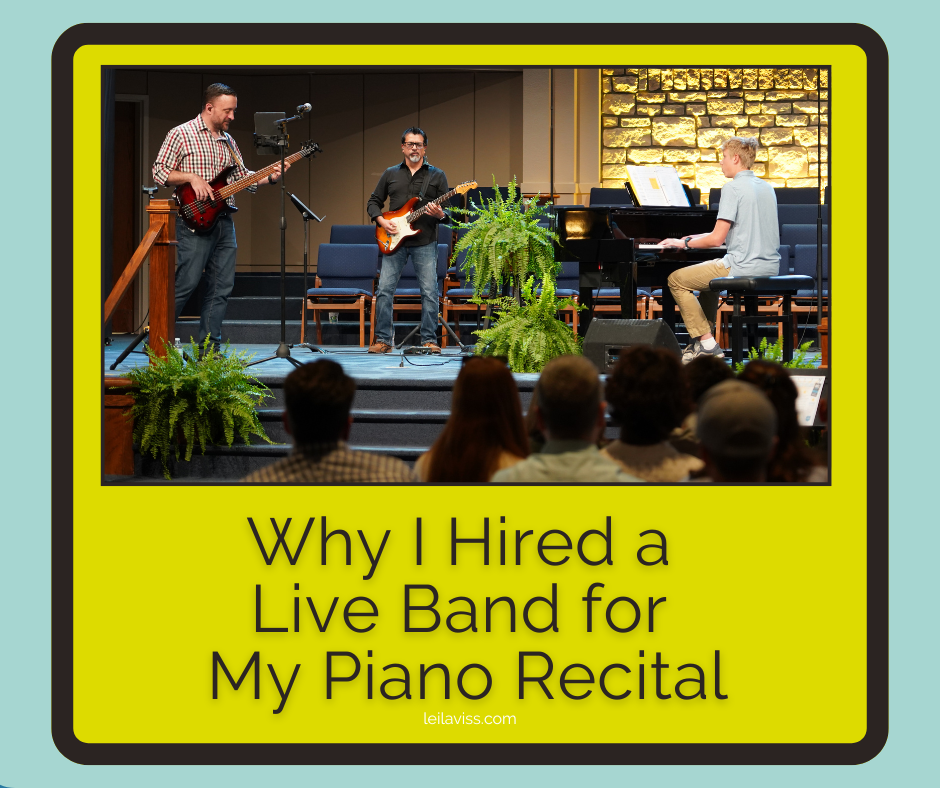
This year, I transformed my traditional spring piano recital by inviting a live band to perform with my students. What began as a dream to help young pianists become more versatile musicians turned into a powerful example of what can happen when students move beyond the page.
Why hire a band to play with my students?
Soon after I earned a master's degree in piano performance and pedagogy, someone from our former church worship team handed me a chord chart and asked if I would play with the band.
With a degree in my hands—literally—I politely declined the offer and returned home completely deflated. Although I could Bach and Brahms, I had NO idea how to read a chord chart, and I didn’t want anyone to know.
Traditionally, piano students learn to read sheet music but rarely learn how to play with a band, follow chord charts, use lead sheets, or create music beyond the page.
That was my background, and the shame I felt for the gaping hole in my skill set transformed the trajectory of my curriculum.
After my devastating blow, my mission became clear for my students:
They would NEVER face the same embarrassment that I did.
They would develop contemporary (functional!) piano skills alongside traditional training so they can confidently collaborate with other musicians in real-world settings.
They would be equipped to play Classical piano AND Classic rock and everything in between.
Rehearsing with a Live Band
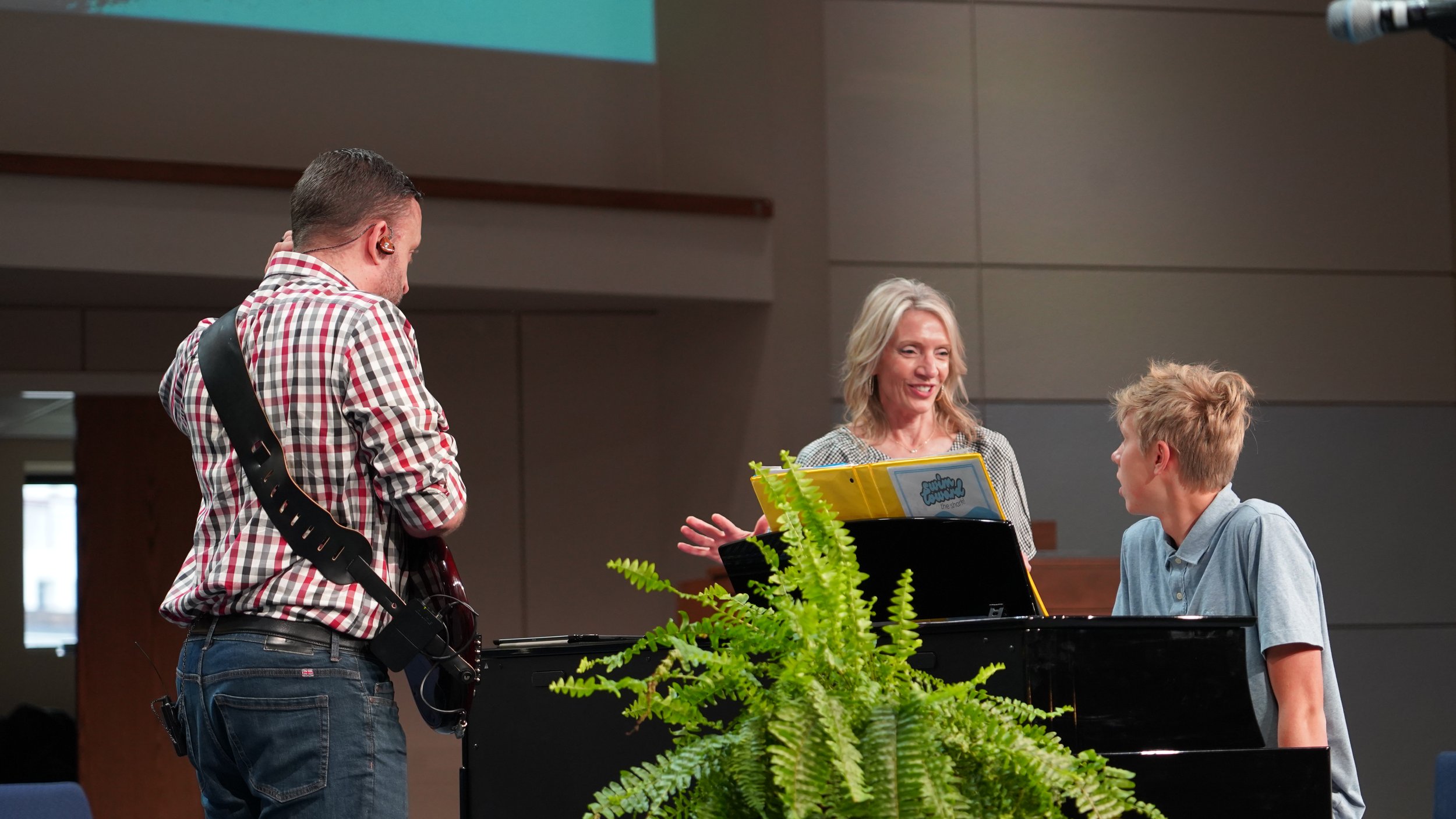
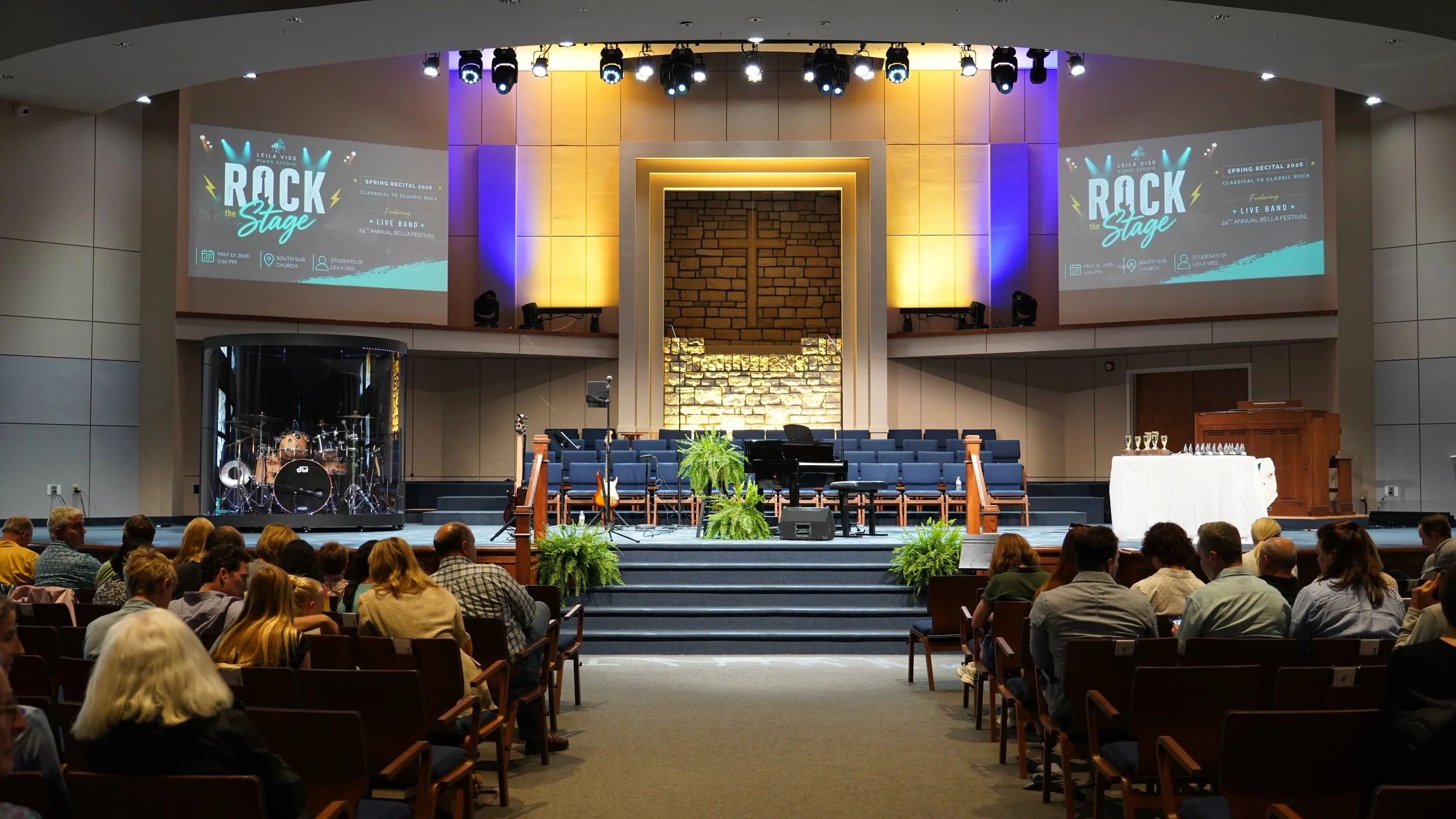
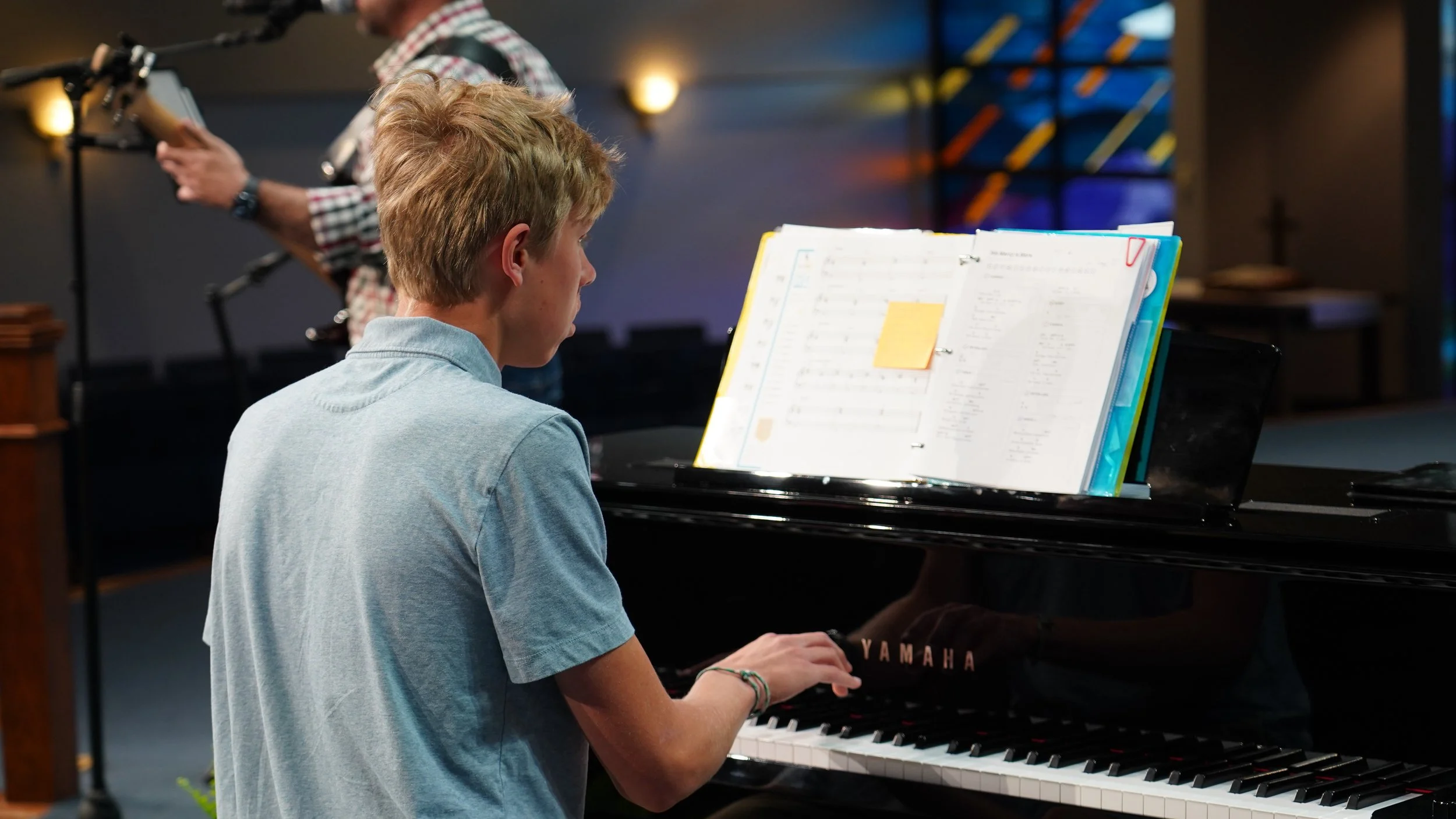
Credit for all photos goes to Ana Lopez.
Why piano students should learn to read chord charts
For over two decades, I’ve been the church organist and pianist at South Sub Church in Littleton, Colorado. Although I was hired to play for the traditional service and accompany the choir about 10 years ago, I was invited to play keys for the contemporary service, and I eagerly accepted. I wanted to shed my shame and play with a band. It gave me the chance to level up new skills, and each service became my training ground.
I discovered that chord charts are merely a blueprint for the eyes. The chord symbols and lyrics provide useful information, but the “gold” is found beyond the page and can only be revealed by the audio file–an MP3, a YouTube video, or a Spotify link. I established a routine. Once the worship songs are loaded in Planning Center, I listen to each tune on my walks, come home, and listen again, jotting down notes on the chart. Then I play along with the MP3, attempting to imitate what I hear using the chord symbols to guide my hands.
As I learned new skills, it became increasingly apparent that teaching students to play by ear, respond in the moment, and perform contemporary music with a band develops skills rarely emphasized in traditional piano lessons.
It confirmed that I needed to teach out of reaction to my experience, and I continued to adjust my curriculum.
Eventually, I wrote a course about the subject with my good friend and worship leader, Drew Collins. It's called How to Play Piano in a Band. It shows how to prepare pianists to perform with a band. If playing with a band feels intimidating to you or your students, this course walks pianists through the exact listening and chord-chart strategies I use every week as a church musician.
Get the four-module course with BONUS summer camp plans HERE.
The setup for our Rock The Stage Recital
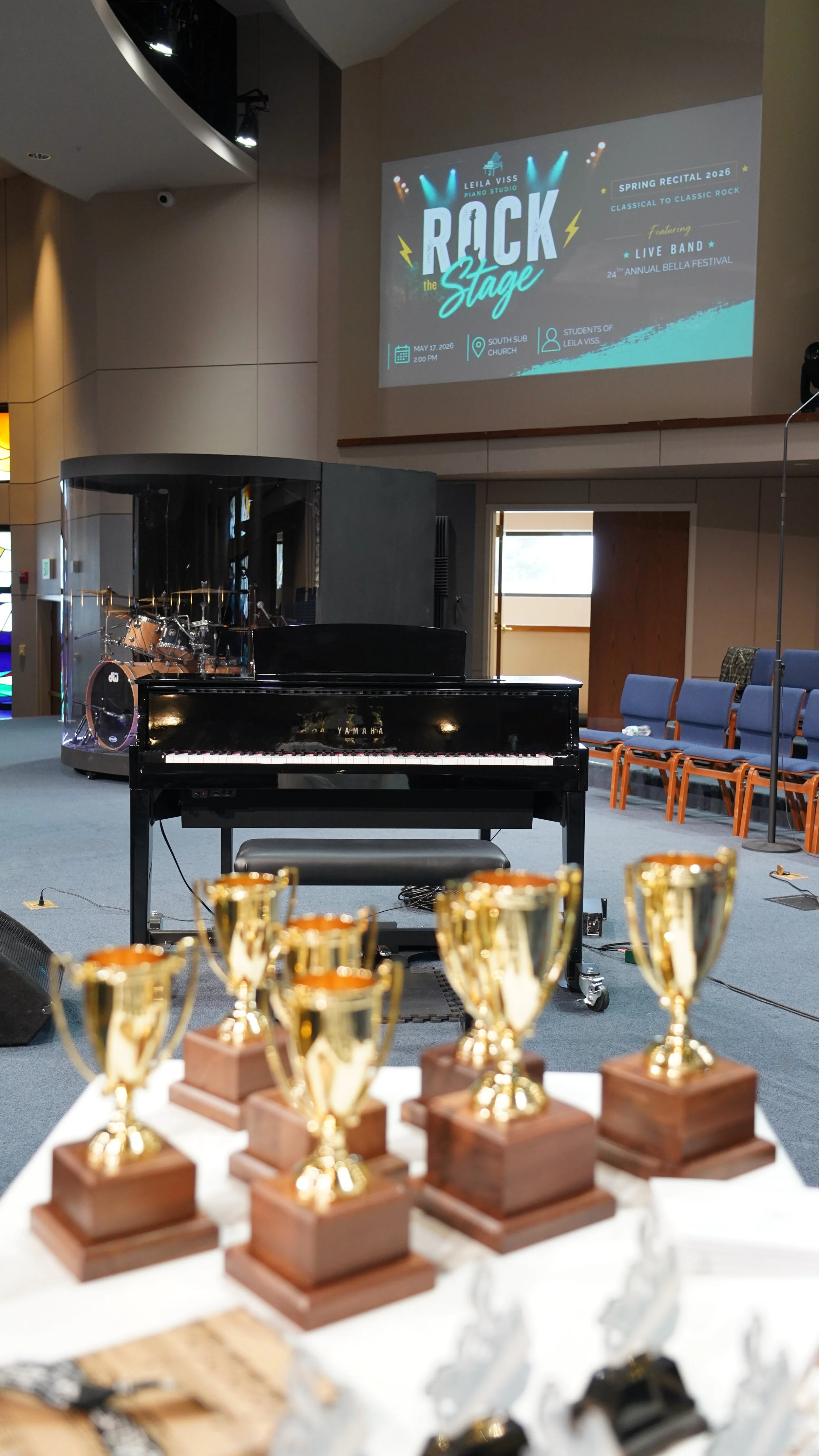
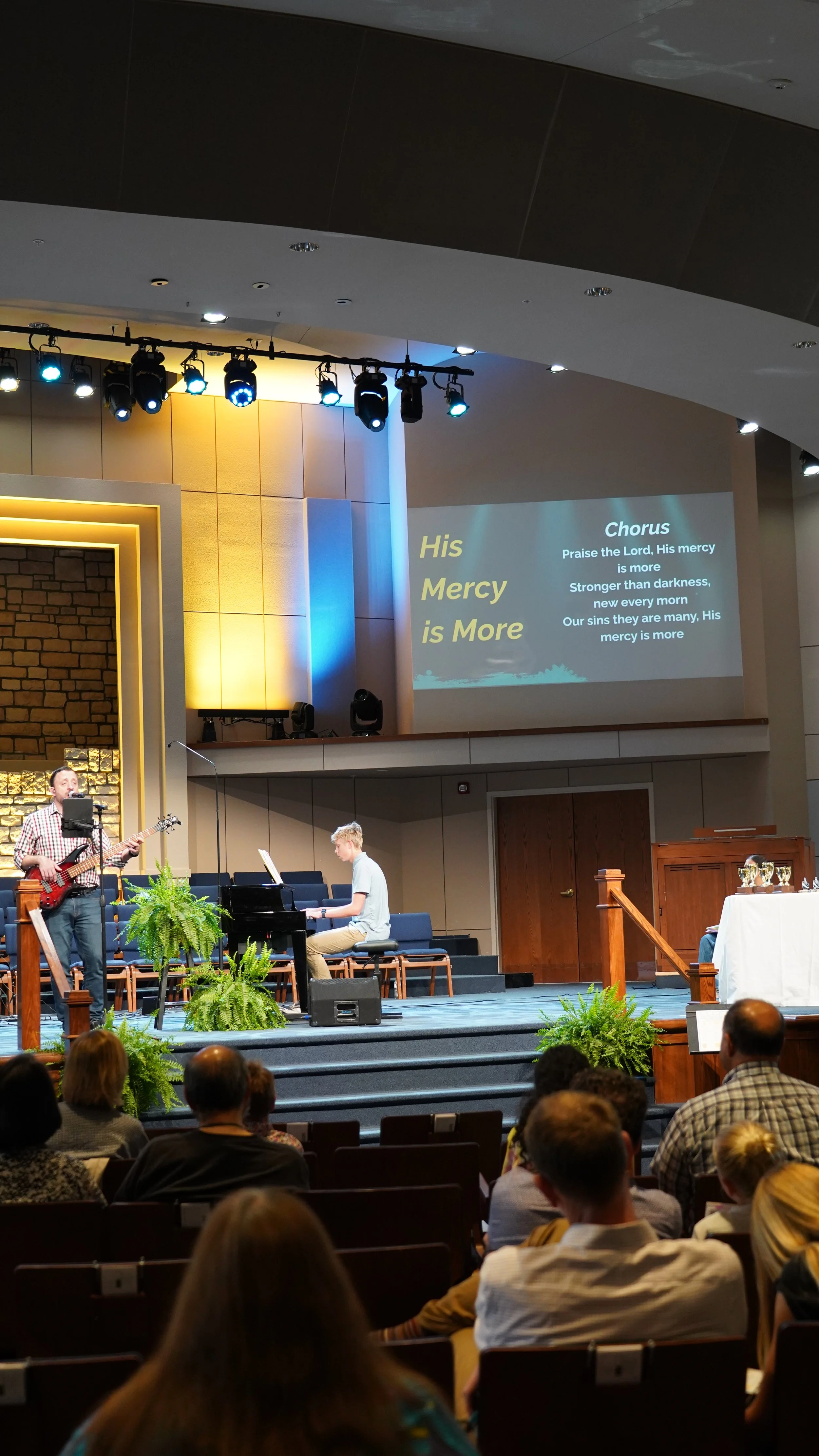
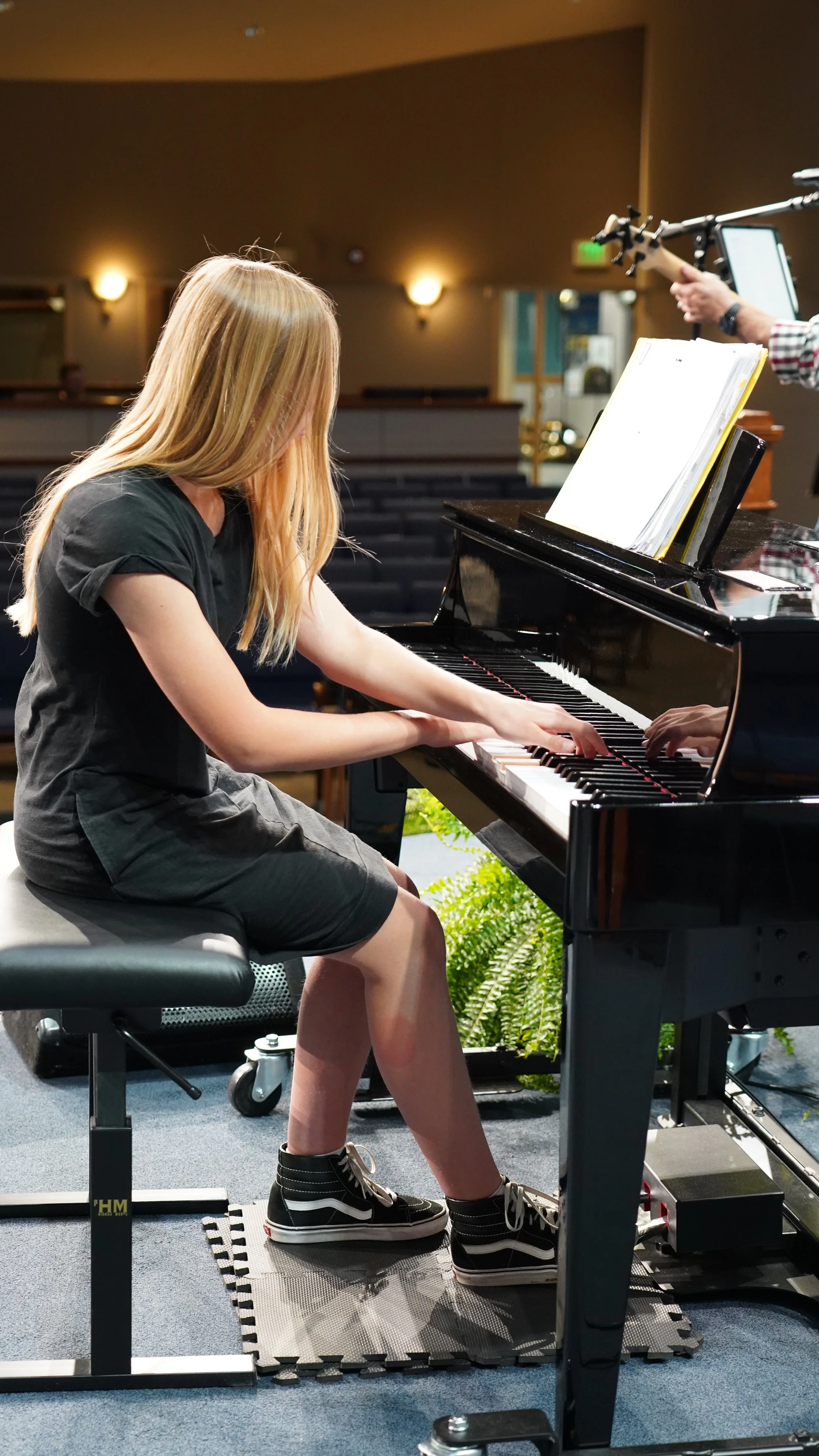
What sparked the idea of a piano recital with a live band
The seeds for hiring a band for a piano recital were sown back in 2014 during a Dallas conference. I watched Kristin Yost's students take the stage with professional musicians, and the impact on families was unforgettable. For over two decades, "THE IDEA"—giving my students the opportunity to play with a live band—stayed in the back of my mind, waiting for the right moment.
That moment arrived in the winter of 2026 as I looked for ways to revitalize my annual spring recital. My current church worship band is exceptional, so I reached out to see if they would be interested in collaborating. Their enthusiastic response provided the motivation I needed to finally bring THE IDEA to life.
First step: choose pianists
At first, I imagined opening THE IDEA to all my students, but then I reconsidered. The logistics seemed impossible. How would I arrange rehearsal time for so many pianists?
So, I pared down the plans and decided to limit student participation to four top practicers. Pianists whom I knew would be reliable with strong chord fluency and ready to meet the challenge.
When approached, all four were on board with THE IDEA and were asked to choose a song to perform with the band.
For two, it took some deliberation, while the other two could name their tune in a heartbeat.
Once we secured the chord charts, our next step was to find the audio component to help fill in the blanks.
Addison: Don't Stop Believin'
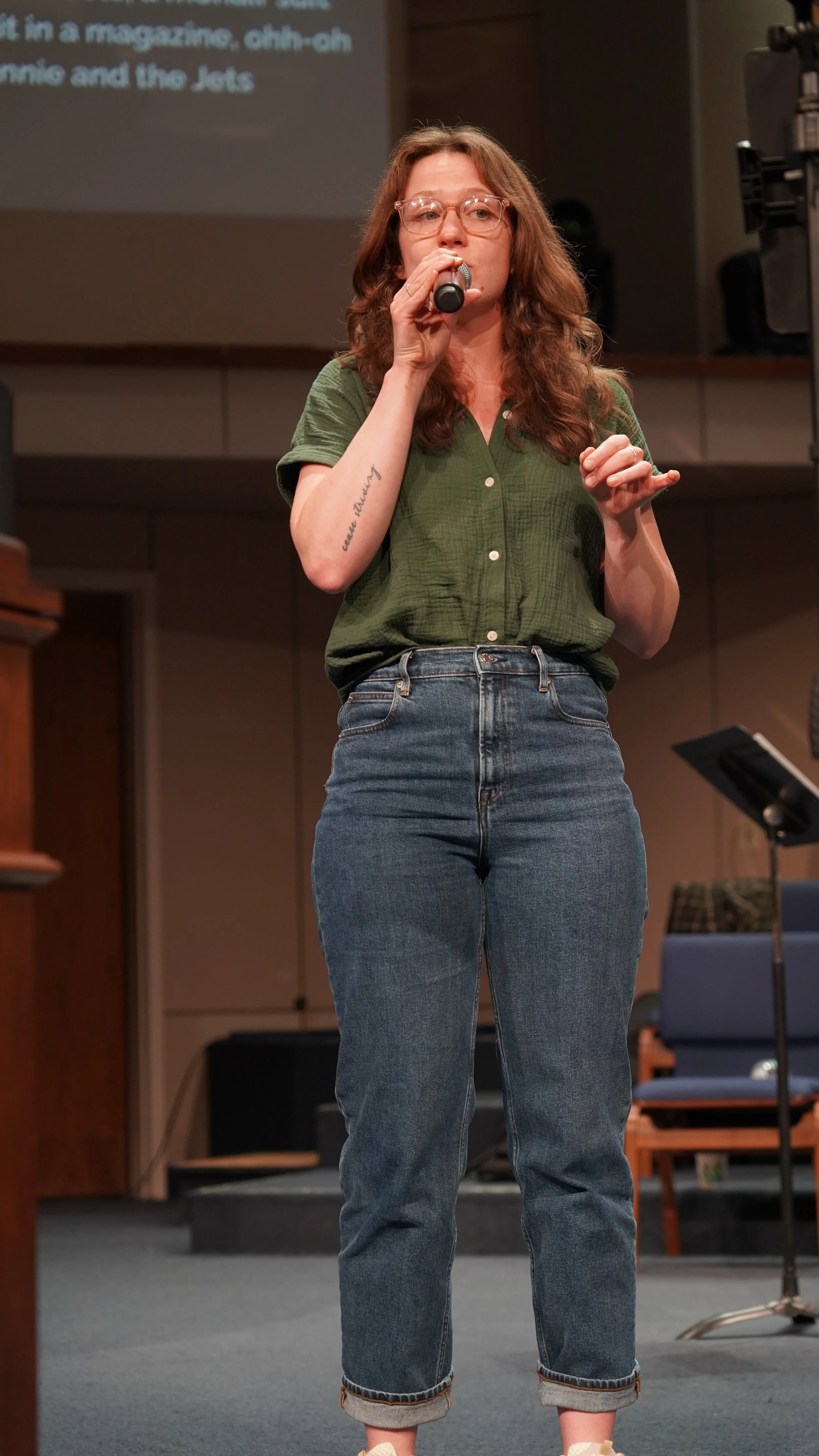
Maddy: Bennie and the Jets
Anneke: Look Up Child
Adrian: His Mercy is More
Second step: secure band members
As I mentioned, South Sub has stellar musicians, and they wholeheartedly bought into THE IDEA.
Vocals and Bass Guitar: Dr. Stuart Dameron → leader of the South Sub Church traditional service and choir director with a doctorate in choral conducting, plays bass and sings regularly in the contemporary service.
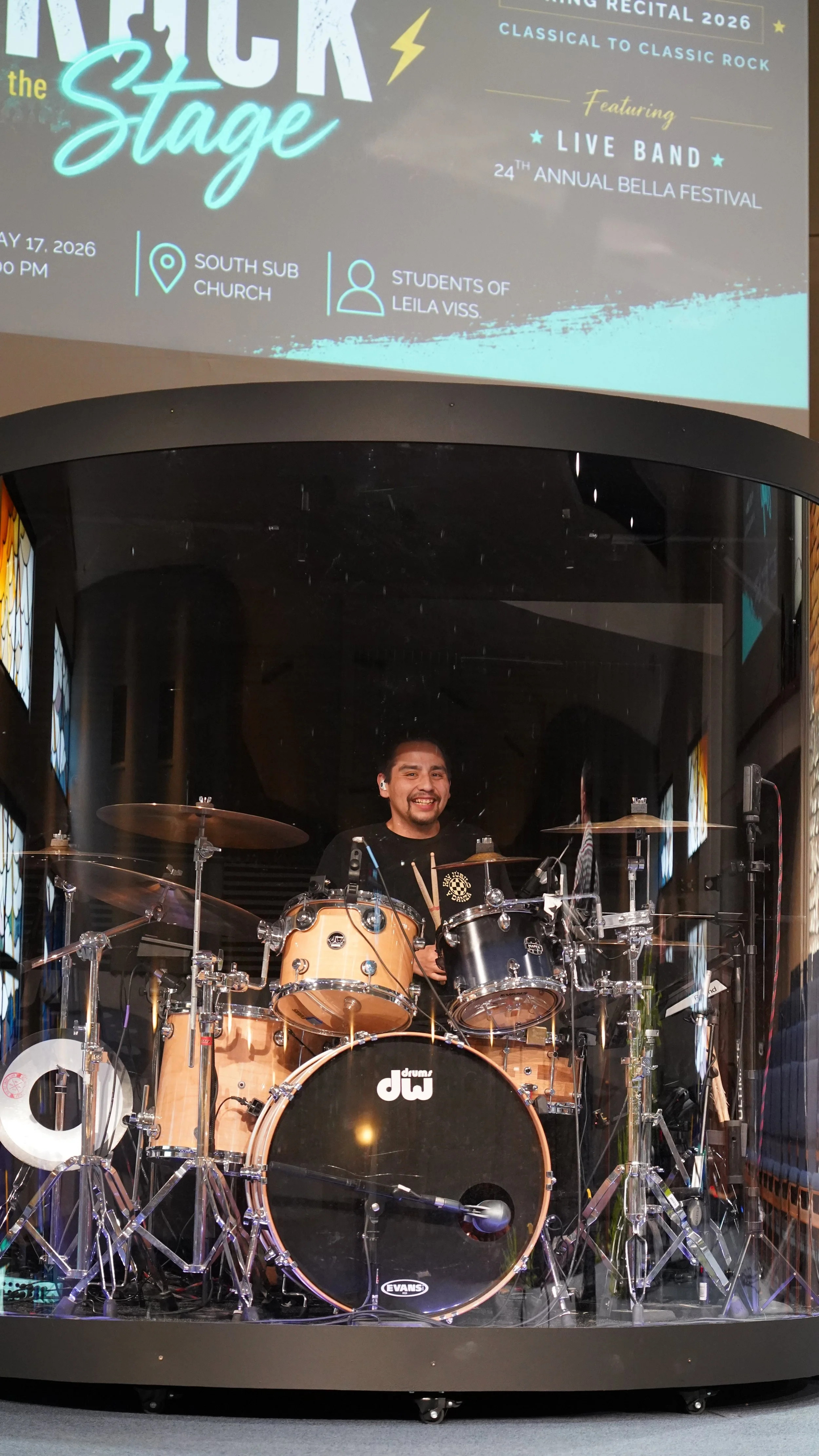
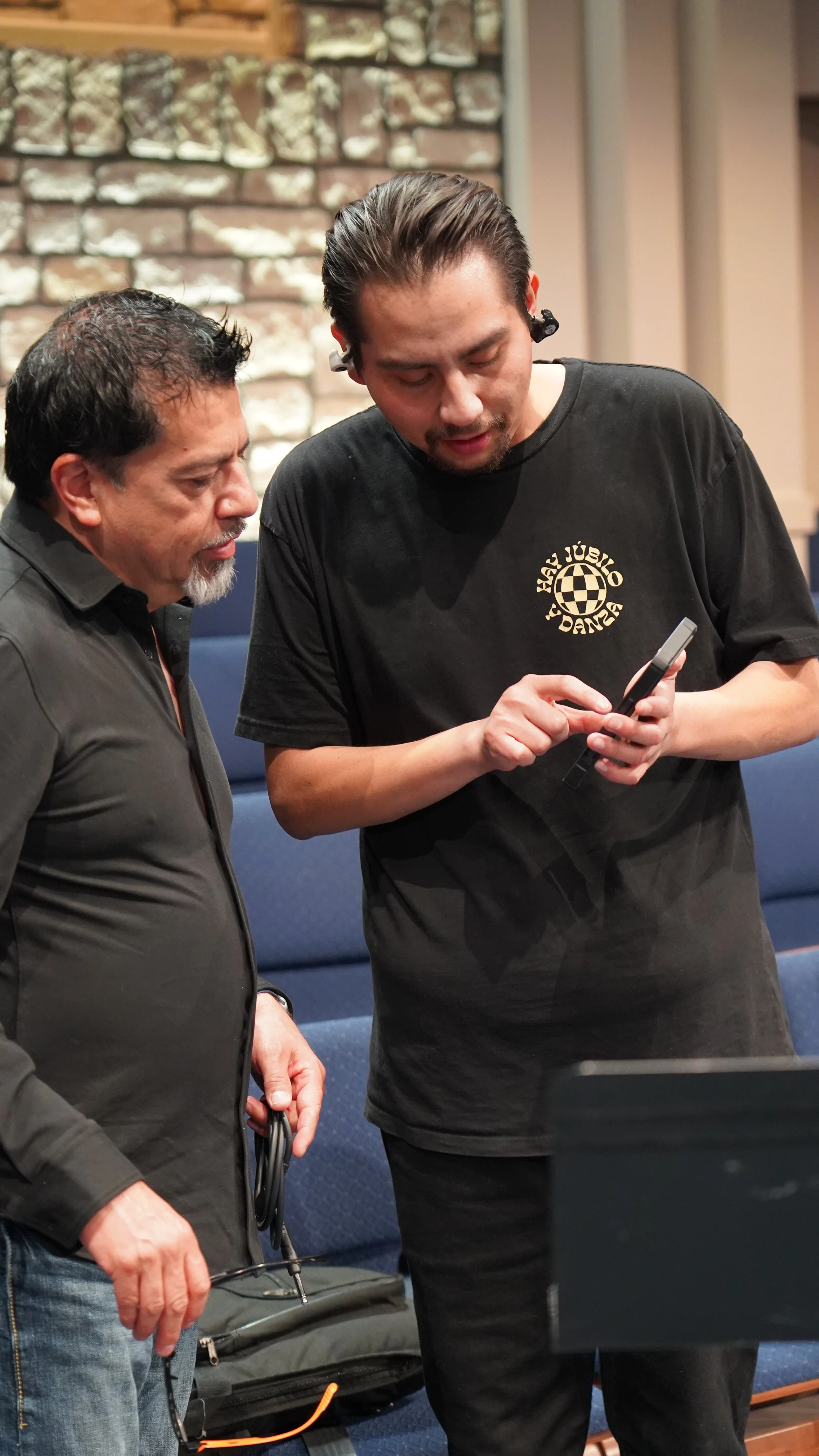
Drums: Ruben Lopez → South Sub Church intern and landscaper.
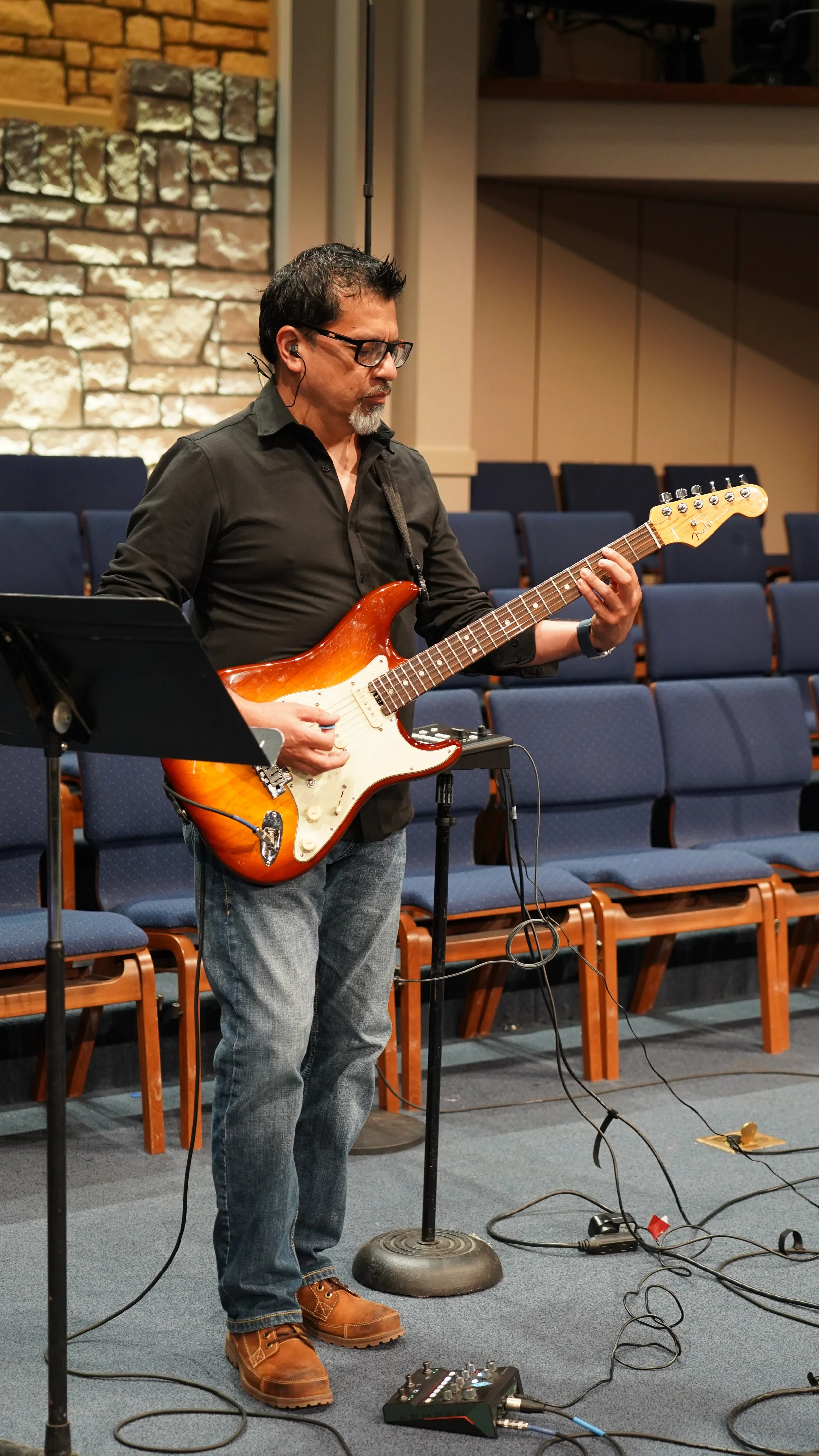
Electric Guitar: Alberto Guerra → friend of Ruben, who willingly stepped even though we had never met.
Vocals for Bennie the Jets: Elizabeth Arons → my adult piano student, who is also a piano teacher, worship leader, and guitar player.
Visual and Audio Tech: Kyle Catalano → South Sub Church’s production lead, who worked his magic to run sound, lights and slides.
Although the South Sub band members initially agreed to save the date, something came up, and the head of the worship team and the guitarist could not make it. That threw a wrench into the plans because he was supposed to sing "Bennie and the Jets," since Elton John’s voice is not in Stuart’s range. Thankfully, my adult piano student, Elizabeth, graciously stepped in to sing that one.
A guitar player was essential, and especially an electric guitar player for “Don’t Stop Believin’” -it just wouldn’t be the same without the iconic solo.
As life would have it, Ruben, the drummer, knew an electric guitarist named Alberto who said he could play. Having not met him before, he was one more wild card as I improvised my way through THE IDEA.
Fingers remained TIGHTLY crossed!
[Spoiler alert: scroll down to hear how Alberto NAILED the guitar solo.]
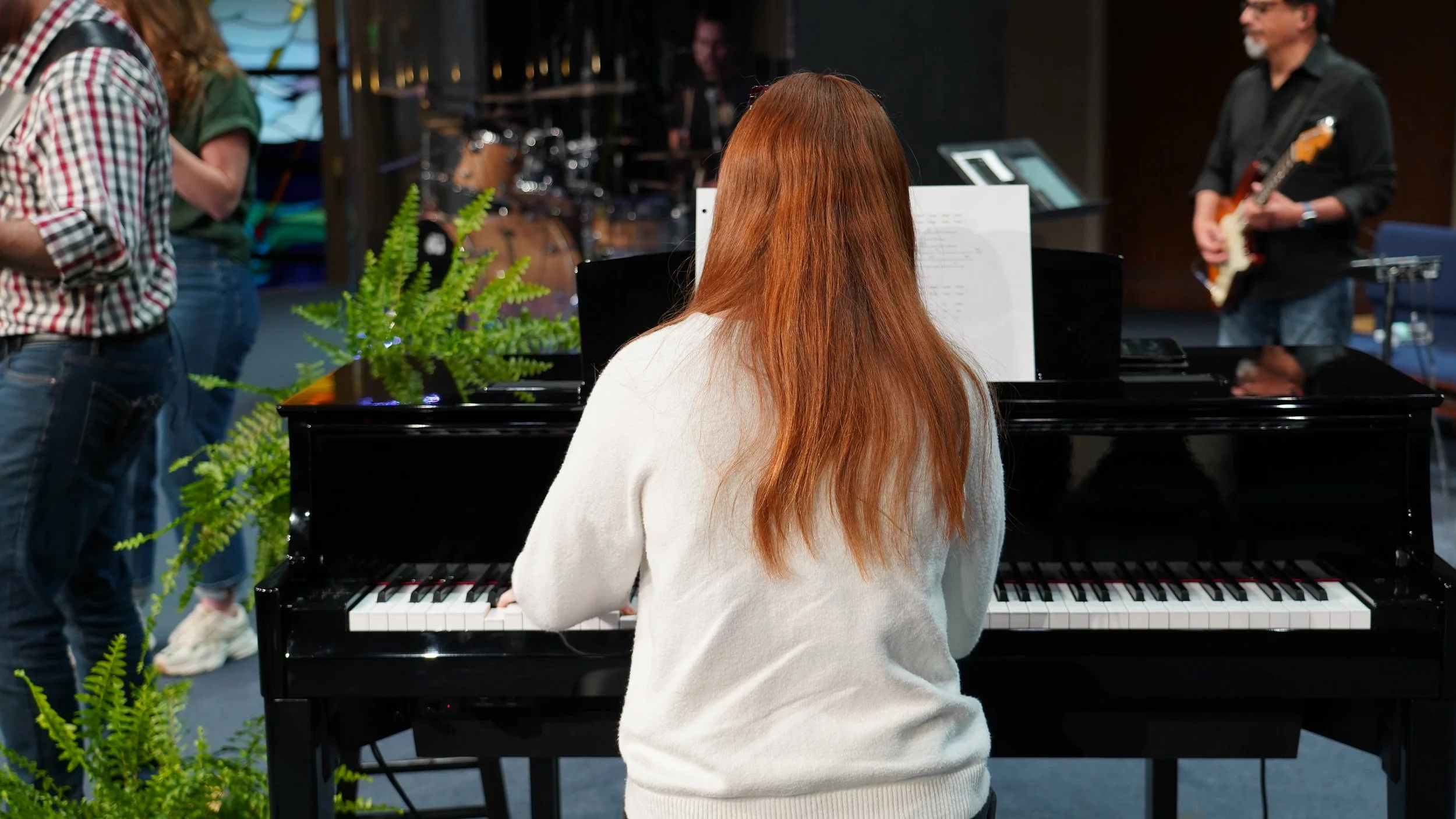
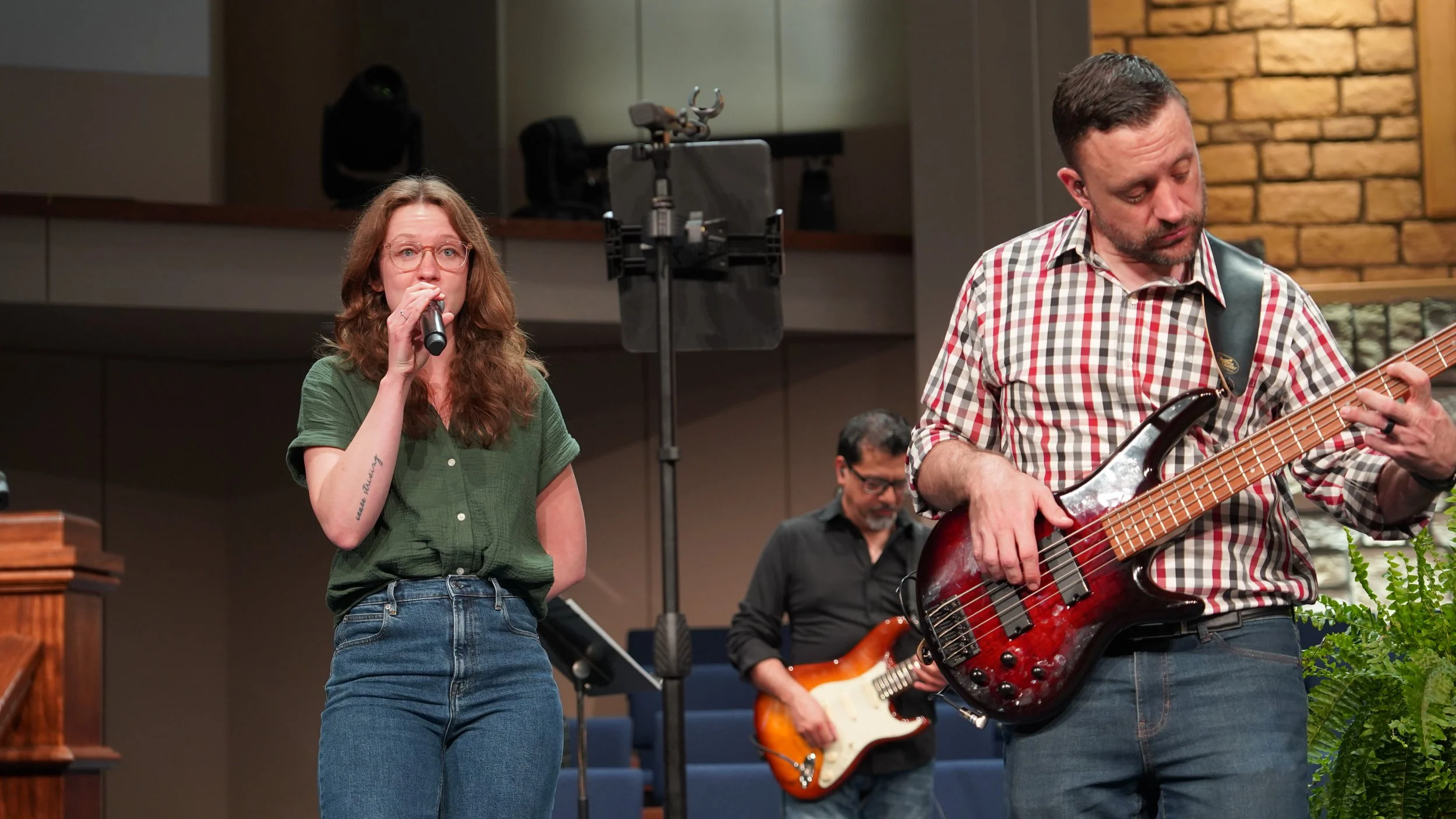
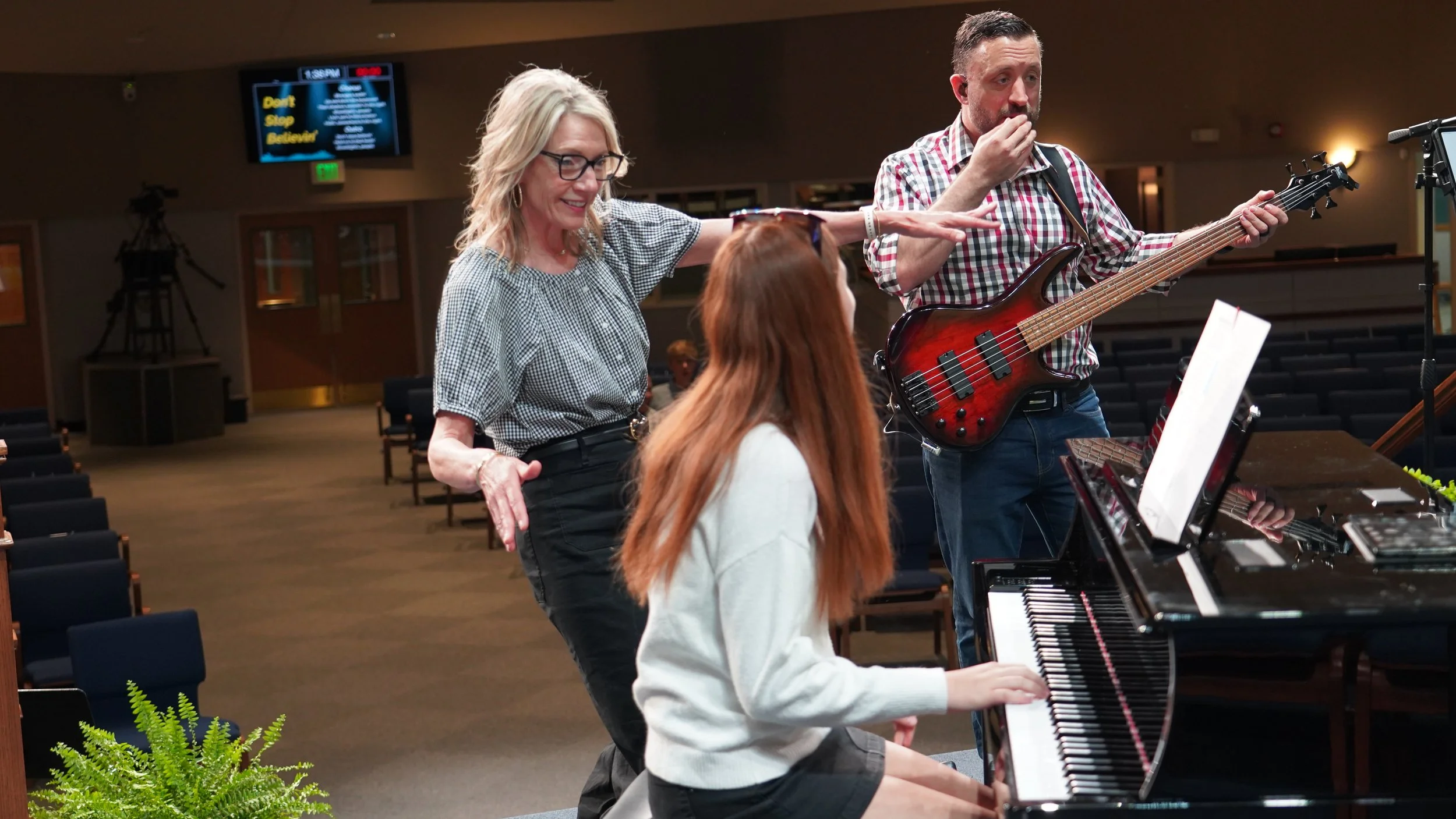
“The band was amazing, and thank you for taking a risk with Addison!”
How my piano students prepared to perform with a live band
The four pianists followed these steps to master their roles for the band performance:
Listen, listen, listen to the tune on Spotify or YouTube. Learning to perform with a live band required students to practice active listening, reading chord charts, interpreting lead sheets, training in rhythm, and developing collaborative rehearsal skills.
Master the chords in root position and inversions.
Determine how the chords were voiced by listening and imitating.
Addison and Maddy downloaded sheet music to help learn some of the patterns.
I recommend Chrissy Ricker’s intermediate arrangement of “Don’t Stop Believin’” to learn the patterns. Addison added more to her right hand than indicated in the score.)
Maddy learned Elton John’s solo in verse four of “Bennie and the Jets” from a YouTube tutorial video! We took screenshots, and she memorized it four measures at a time. Yes, she really is that diligent. Maddy nailed the solo at the recital. See the video below!
Following Molly Gebrian’s research in her book Learn Faster, Perform Better, students used Variable Practice. They repeated sections or the entire piece in a different way, with purpose.
Variable practice strategies:
Play through a verse or chorus without audio and sing along.
Play along with the audio and note the tricky parts–the parts that are too hard to play at the goal tempo.
Play the tricky part with a metronome at a “comfort tempo” with zero errors or at the “speed of correct.”
Slowly increase the metronome number until that spot can be played at the goal tempo.
Play along with a rhythm style on my Clavinova while I “try” to sing the lyrics at the goal tempo.
Mixing up how they practiced the chord chart prepared them for “whatever may come” during the band rehearsal.
Check out the Rock the Stage Band rehearsing “Bennie and the Jets” and Maddy rehearsing in the studio.
(The audio quality from where I was sitting to grab this video does not match the quality the audience heard.)
The live band piano recital experience
An attempt to schedule band members and four pianists for a rehearsal felt daunting, so despite some major trepidation, I decided to schedule only one rehearsal, an hour before the recital.
Although this sounds risky (and it was!), it truly reflects the lives of most band members… they usually get one rehearsal the day of, two if they’re lucky.
I had to trust in my students’ preparation. It turns out, each of them (as I expected) stepped up to the occasion and rocked the stage!
Because I didn’t want the band members to stick around for my entire recital, the band kicked off the recital with the four songs. They left the stage, and the recital continued.
The recital felt more like a live concert than a traditional piano recital. Students dressed for the theme, performed contemporary repertoire, and experienced the thrill of making music alongside professional musicians.
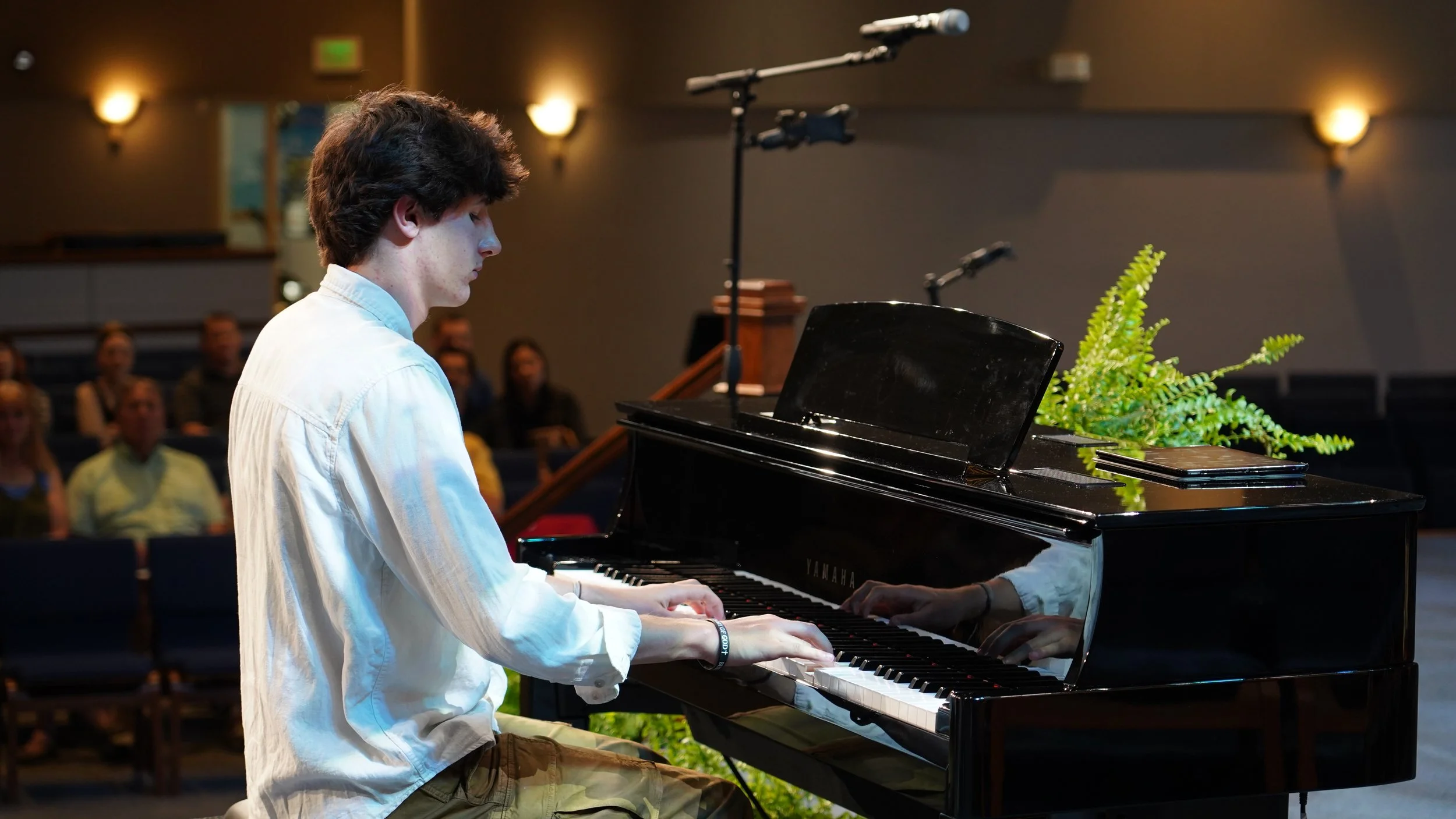
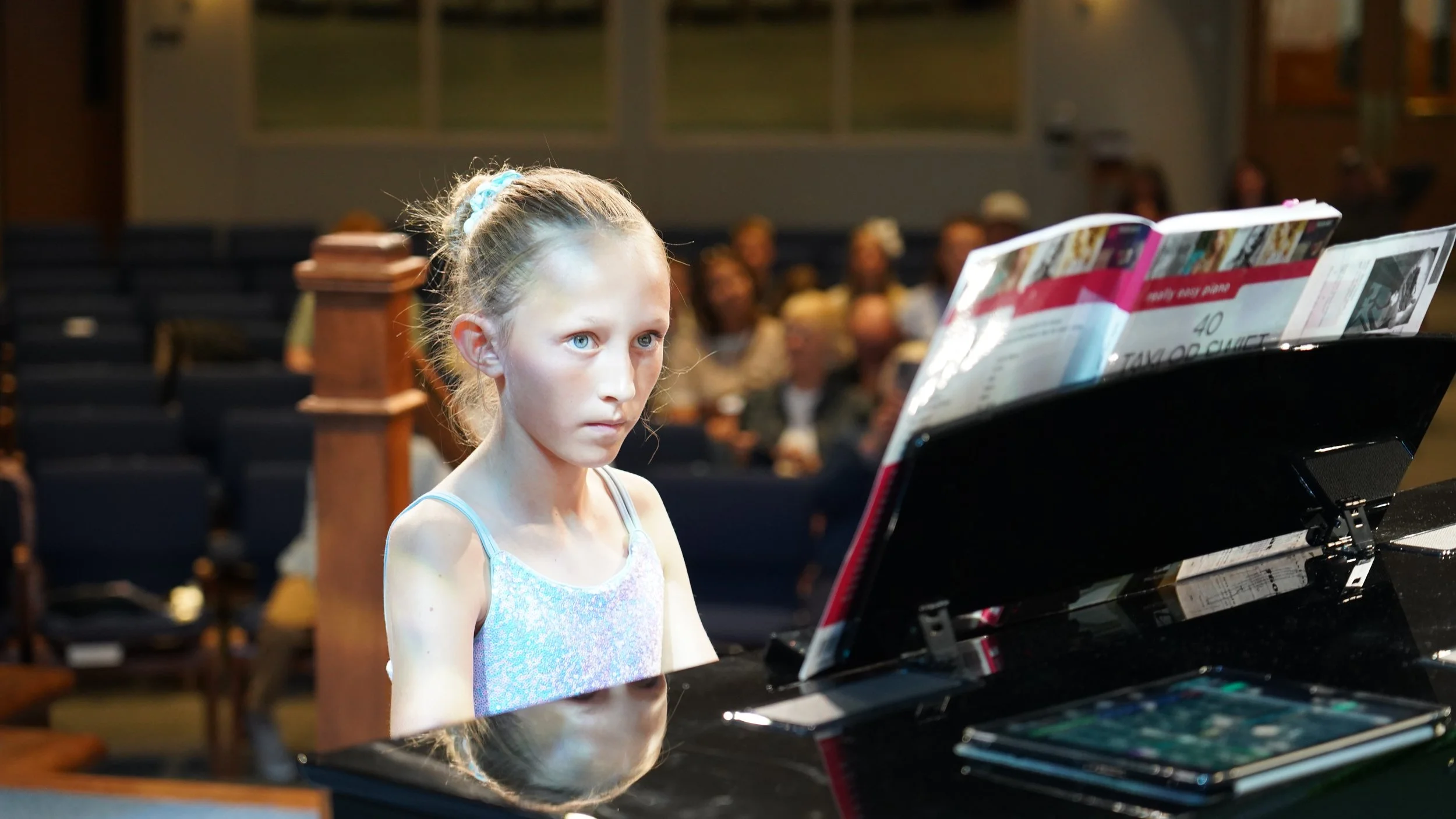
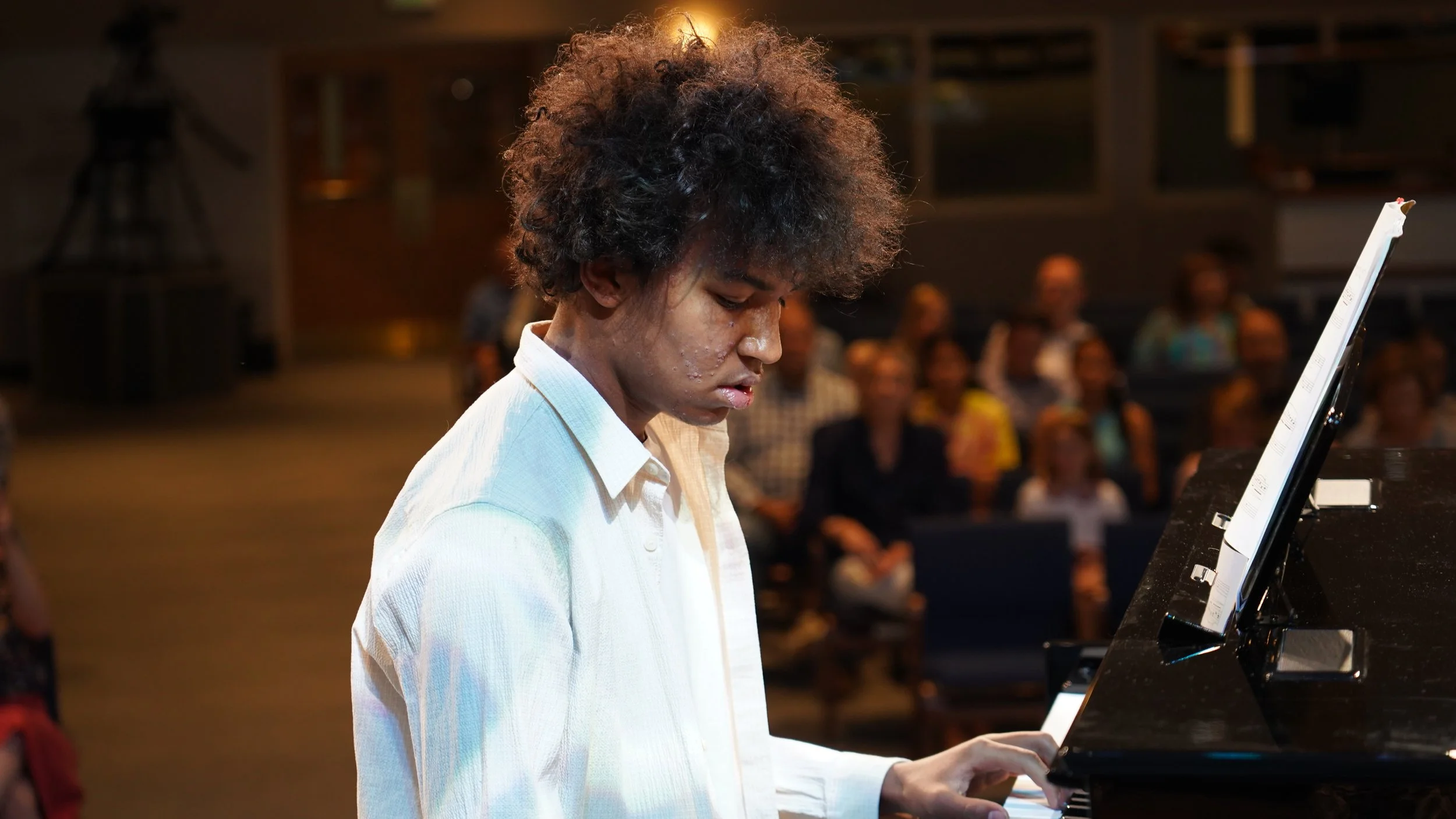
After the band performance, the recital continued with pianists playing Beethoven, sonatinas, movie soundtrack hits and pop tunes including a Swiftie hit.
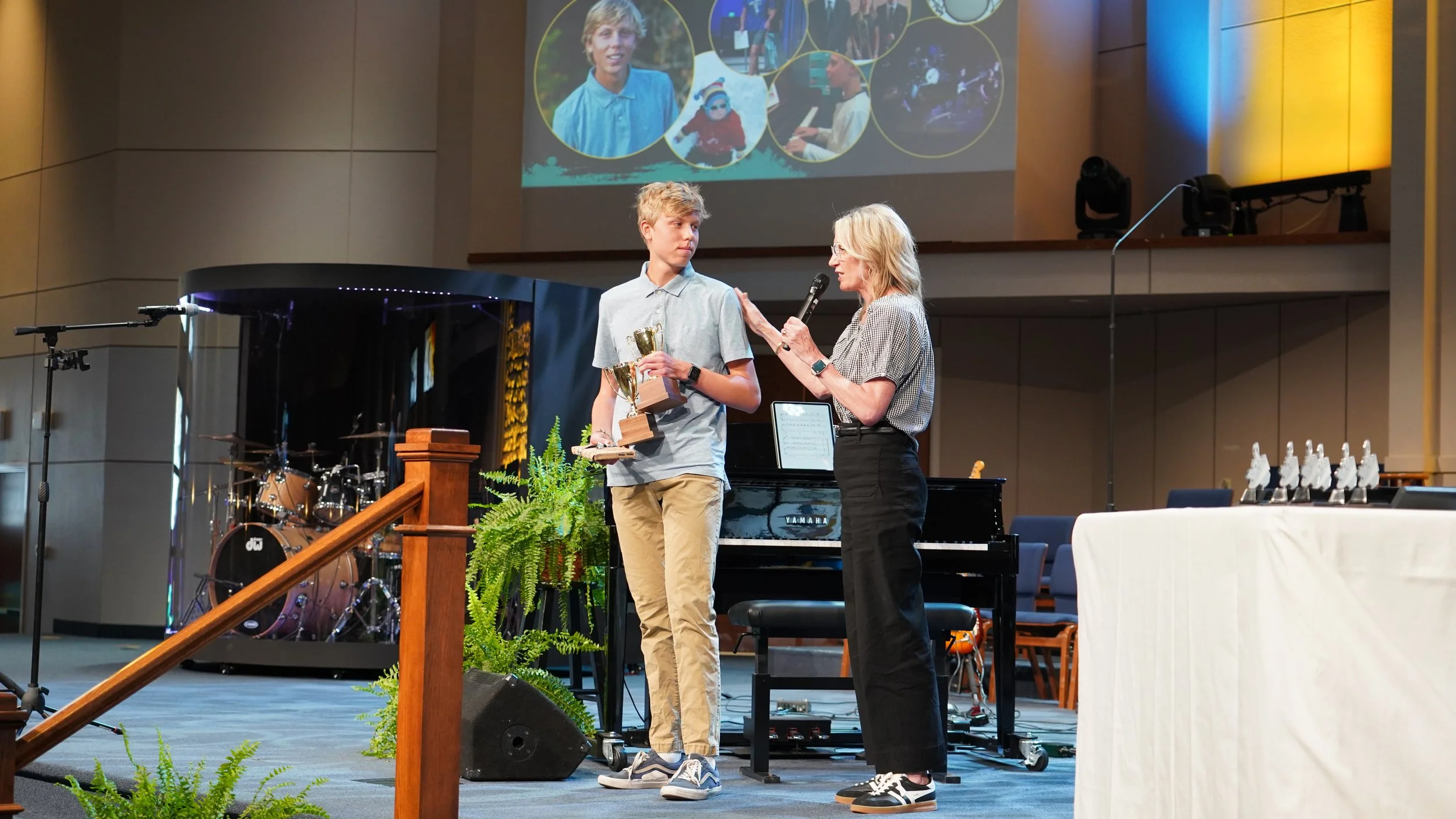
They all received a participation award an several students earned their 30 and 45 point National Federation of Music cups. I also said goodbye to Adrian as he is graduating and moving on to university.
Recital title
I leveraged the advanced visual and audio capabilities at South Sub Church to create lyric slides and individual slides to honor every student.
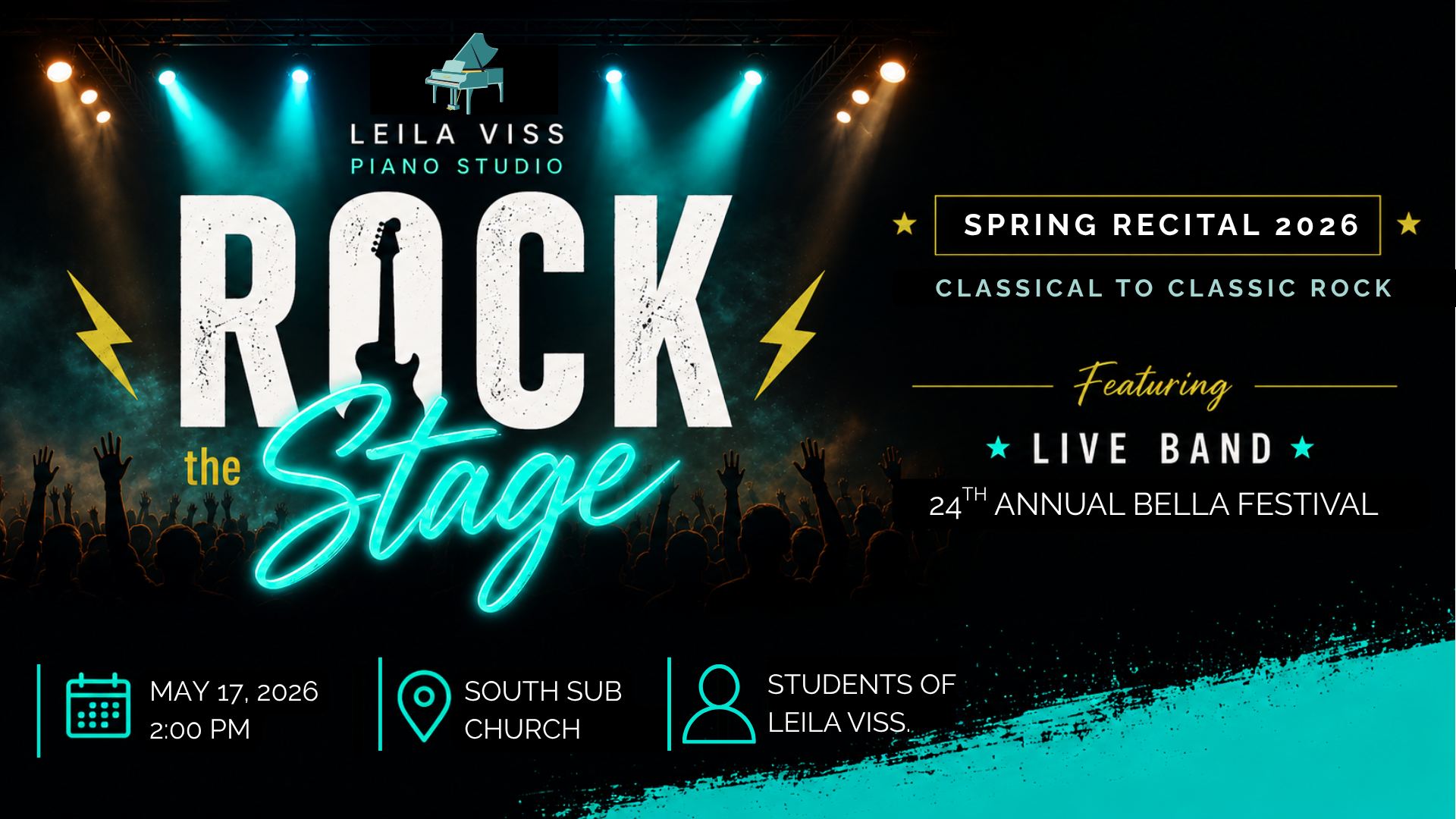
During the planning phase, I faced decision fatigue and turned to Sage—my name for my ChatGPT subscription—to help brainstorm ten possible recital titles. I ultimately chose "Rock the Stage" and then tasked Sage with creating a custom image for the presentation slides.
This is what Sage came up with, and I was absolutely gob-smacked. It was EXACTLY what I was looking for!
I downloaded the image and tweaked it as needed in Canva.
Recital program
Audience members received a paper program listing the pianists in order.
Side note. On the other side, it listed options for summer lessons and a QR code linking to more information. I spent the time creating this side of the program because some parents tend to neglect their overflowing inboxes. This hard copy is my attempt at a workaround.
Here’s the link I shared on the program.
“You are an answer to prayer.”
How to pay for the band
Most band members had been at church since 6:30 that morning to play for our church services. They kindly extended their hours to make THE IDEA a dream come true for me.
As a musician for hire myself, I wanted to honor the band members' time and expertise. At first, I considered asking student parents to chip in to pay for the musicians, but since it was my IDEA and the first time implementing it, I decided to cover the cost.
When I do this again, I will continue to reserve THE IDEA for students who truly deserve and want this opportunity, and will charge their families a fee to participate.
Students developed collaborative music-making skills by rehearsing with professional musicians.
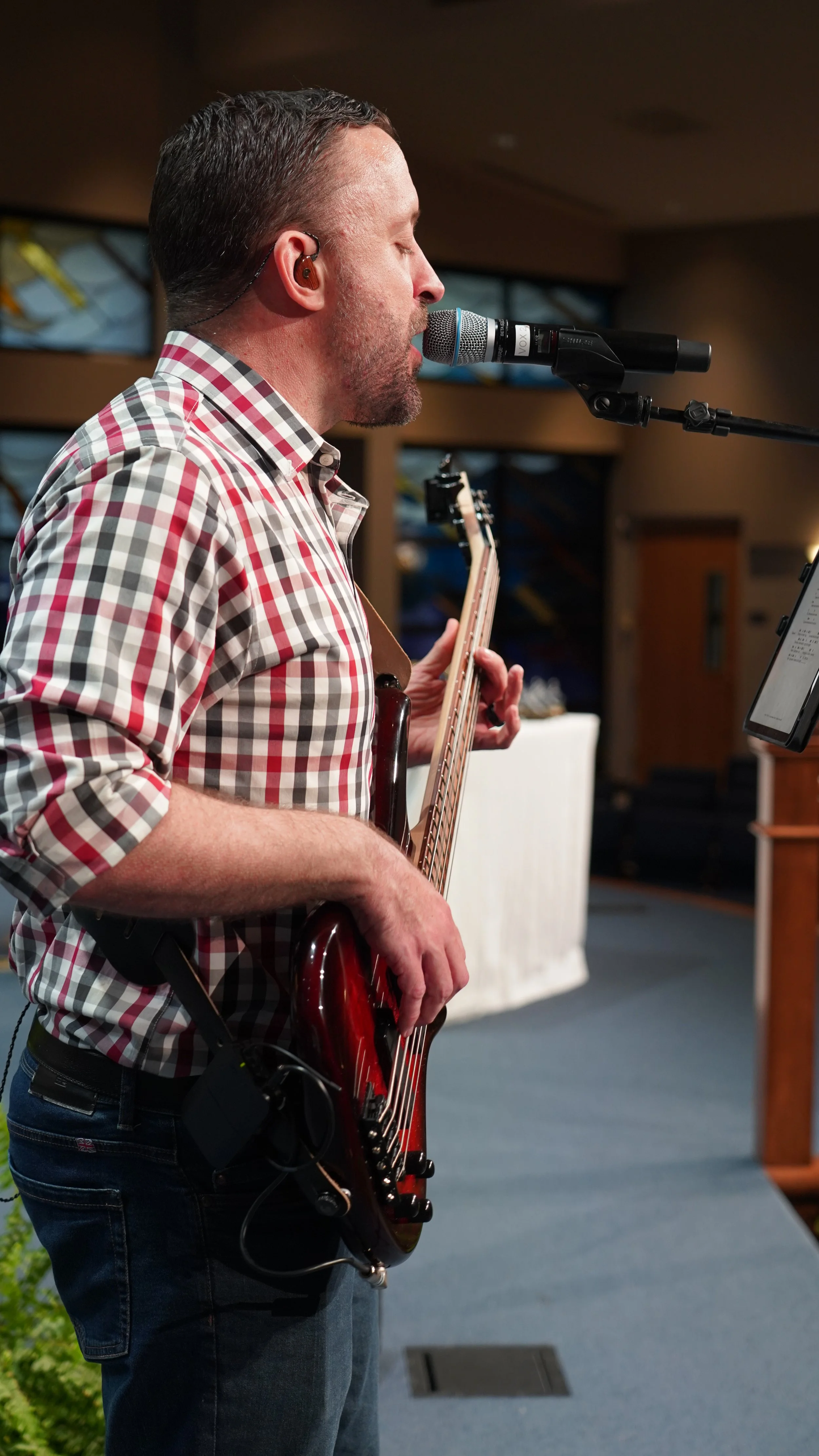
What I learned from hiring a band for my students
Hiring pros was worth the expense. They were clearly prepared, at ease and eager to support each pianist as they ironed out tempos, cues, and endings. The way the band came together for each song gave me goosebumps.
Students gained new skills. For the first time, Maddy learned to lead the band in a head bob to signal her requested trash-can ending. Priceless.
Schedule the band first. Saving the band performances for the end of the recital would have led to a climactic ending; however, it turned out to be the right decision because several families had to leave early and would have missed the show.
Hire a photographer. I really wanted to document THE IDEA with photos, and it turned out that Ana, the drummer’s wife, is a stellar photographer and agreed to stay and take pics. I have NEVER had an official photographer at a recital, and I’m over the moon with the photos. What a treat. All photo credits go to Ana Lopez.
Ask someone to record each song. Although I had a designated photo and video opp chair close to the stage, some parents only captured part of the performances. Note to self–ask for someone to record each performance next time…nuts!
Playing in a band builds stronger musicianship. Reading from chord charts and performing with a live band challenged students to learn music in fresh ways, listen differently, communicate clearly, recover from mistakes in real time, and trust their preparation. Unlike in a traditional solo recital, students had to interact musically with other performers, respond to cues, and remain flexible throughout the performance. This type of collaborative music-making builds confidence and musicianship in powerful, real-life ways.
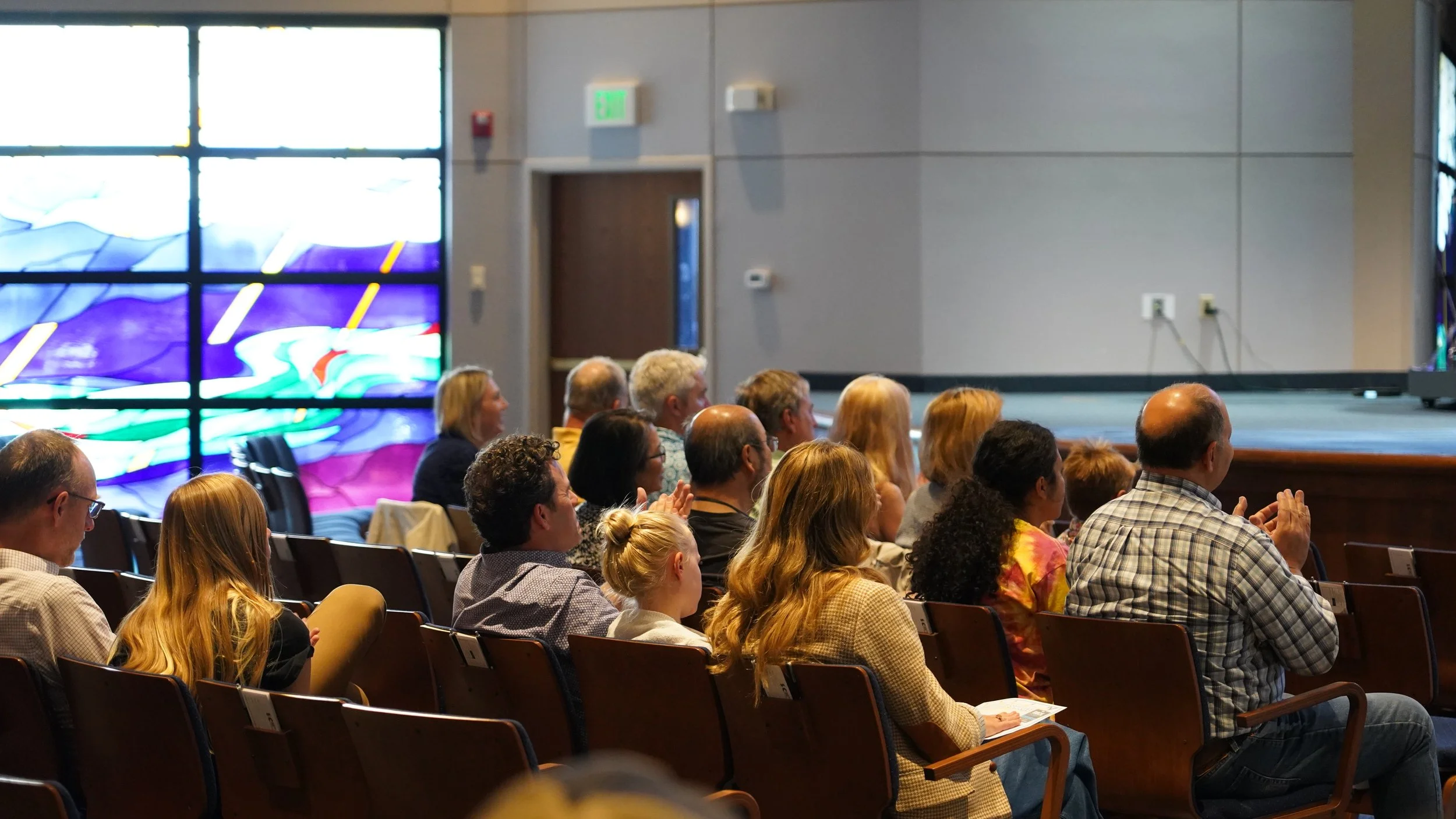
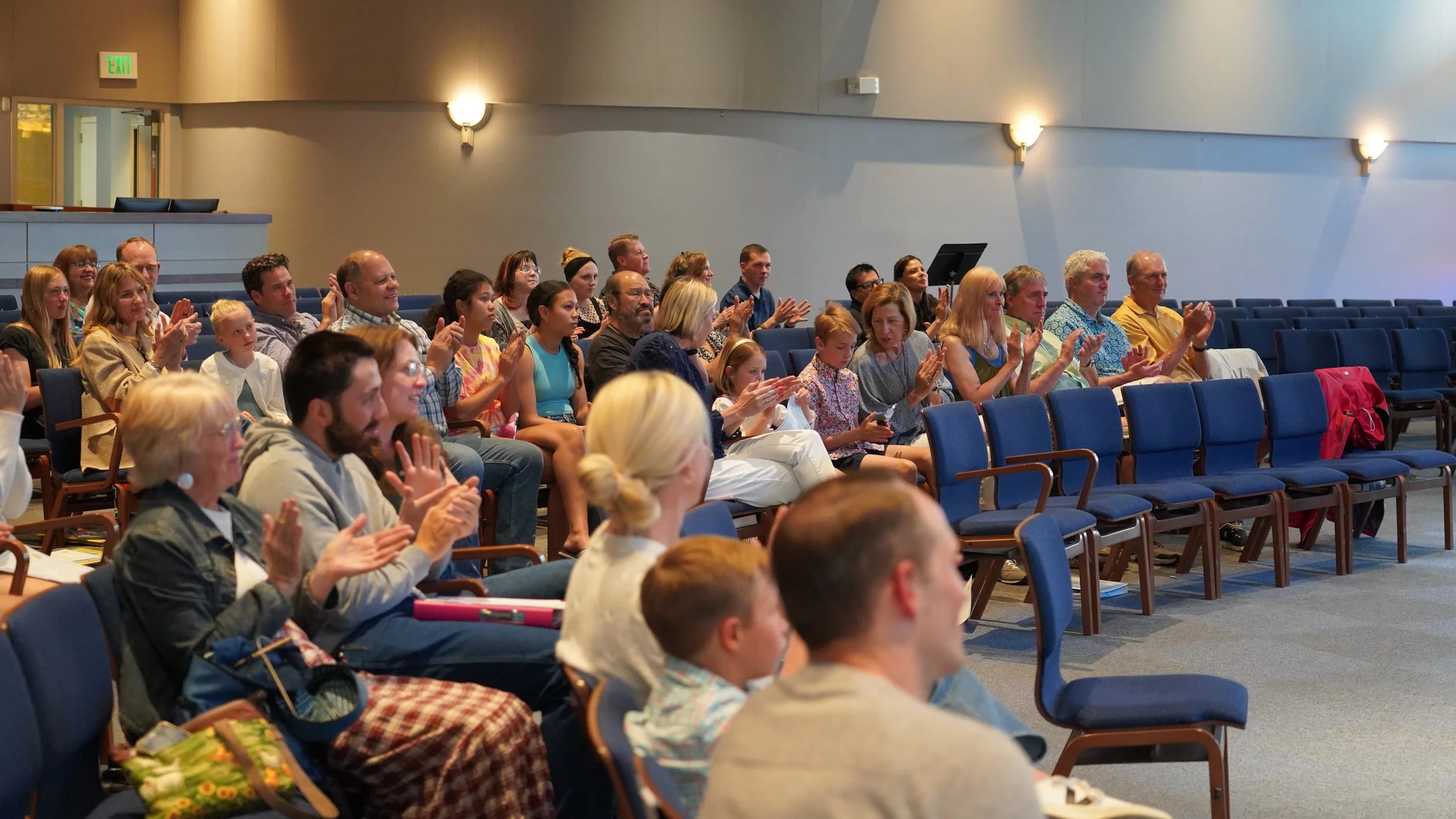
This was a big picture moment. The applause was louder and longer than usual when the band finished. The audience clearly appreciated the band, and I’m guessing parents saw how their investment in piano lessons can lead to skills that last a lifetime.
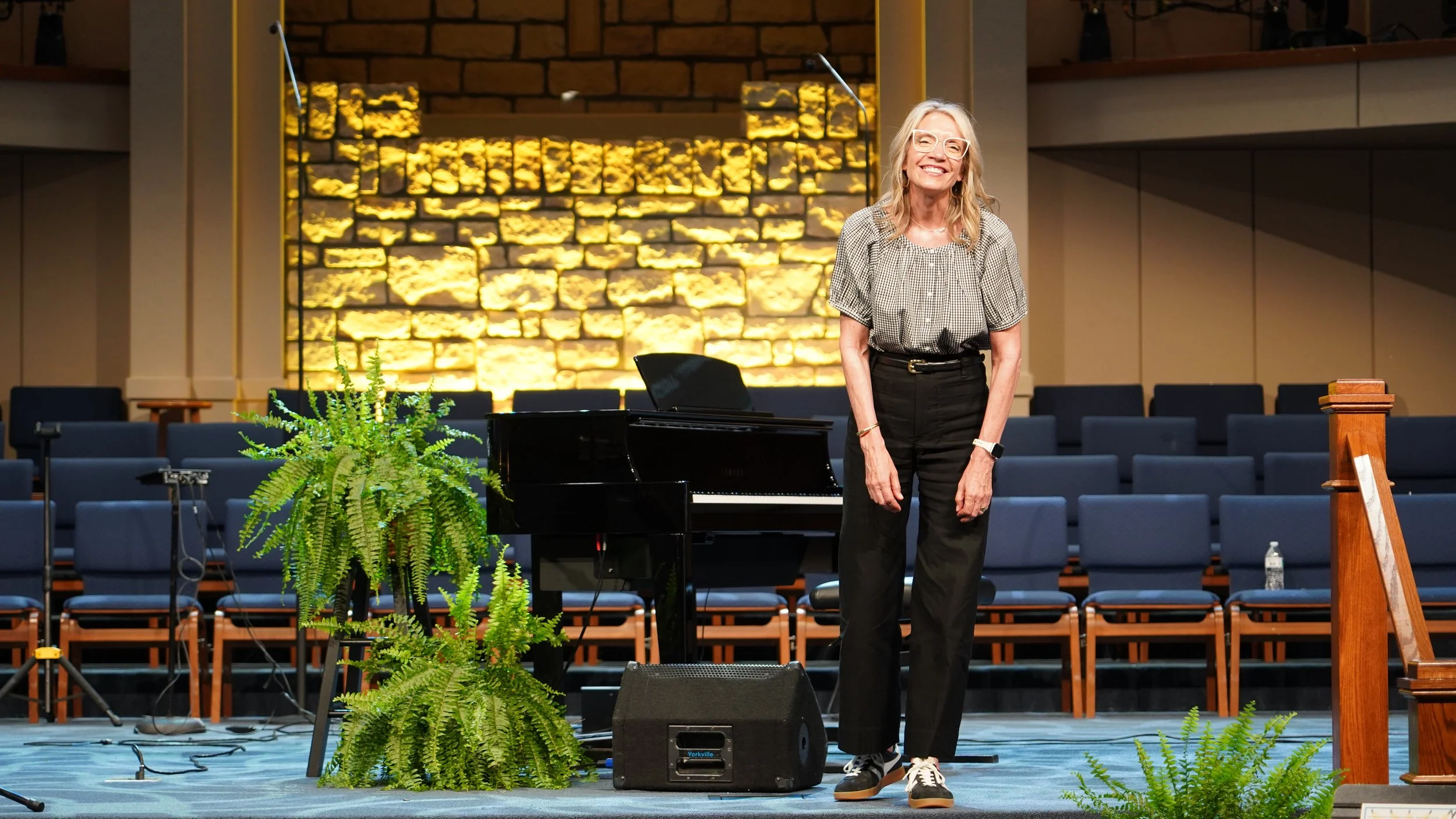
The IDEA worked. Several times, I jumped up and down, hooted, and hollered from unabandoned joy because the band sounded SO good. My inexplicable relief that THE IDEA worked was on full display like 4th of July fireworks.
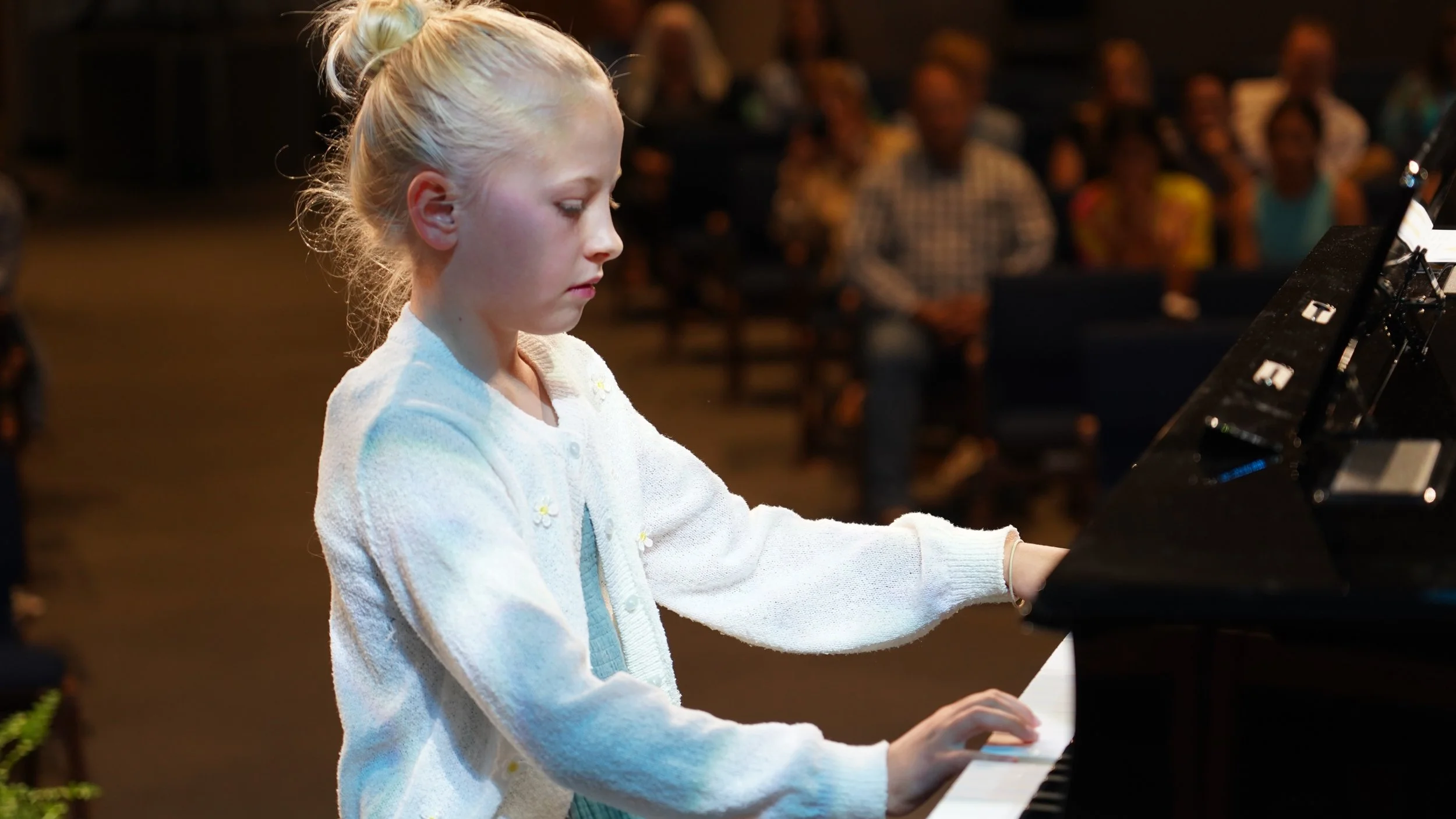
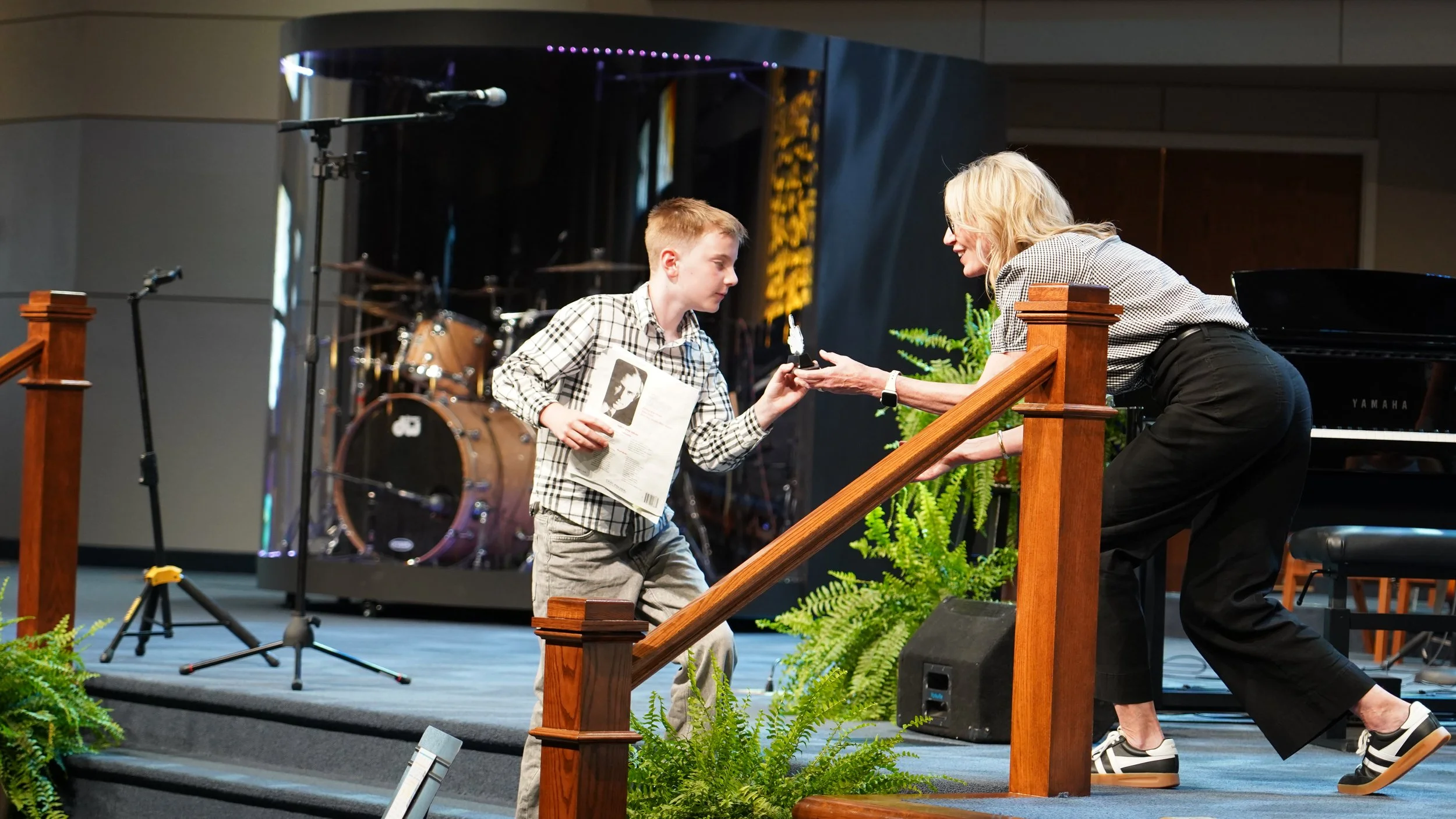
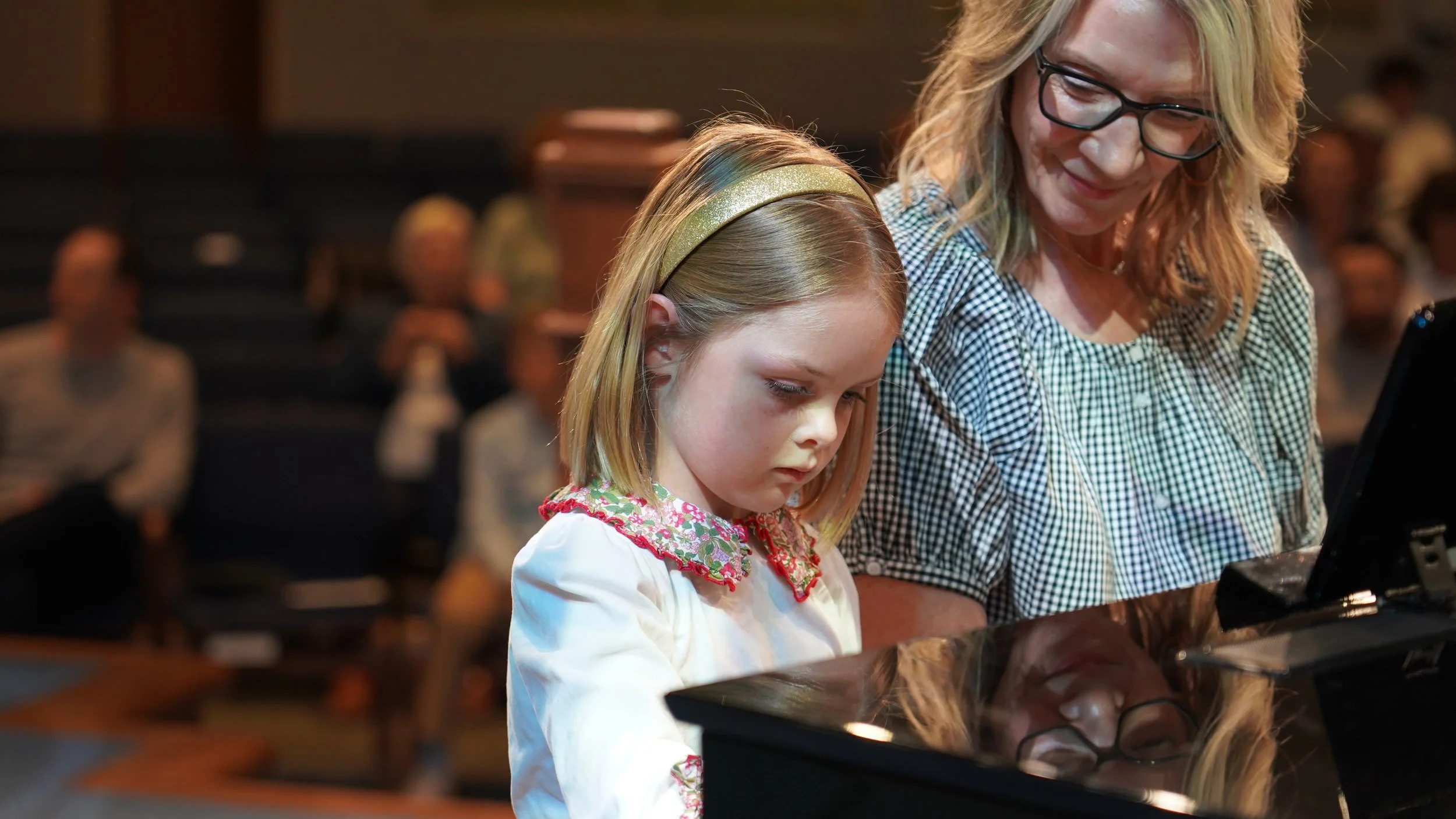
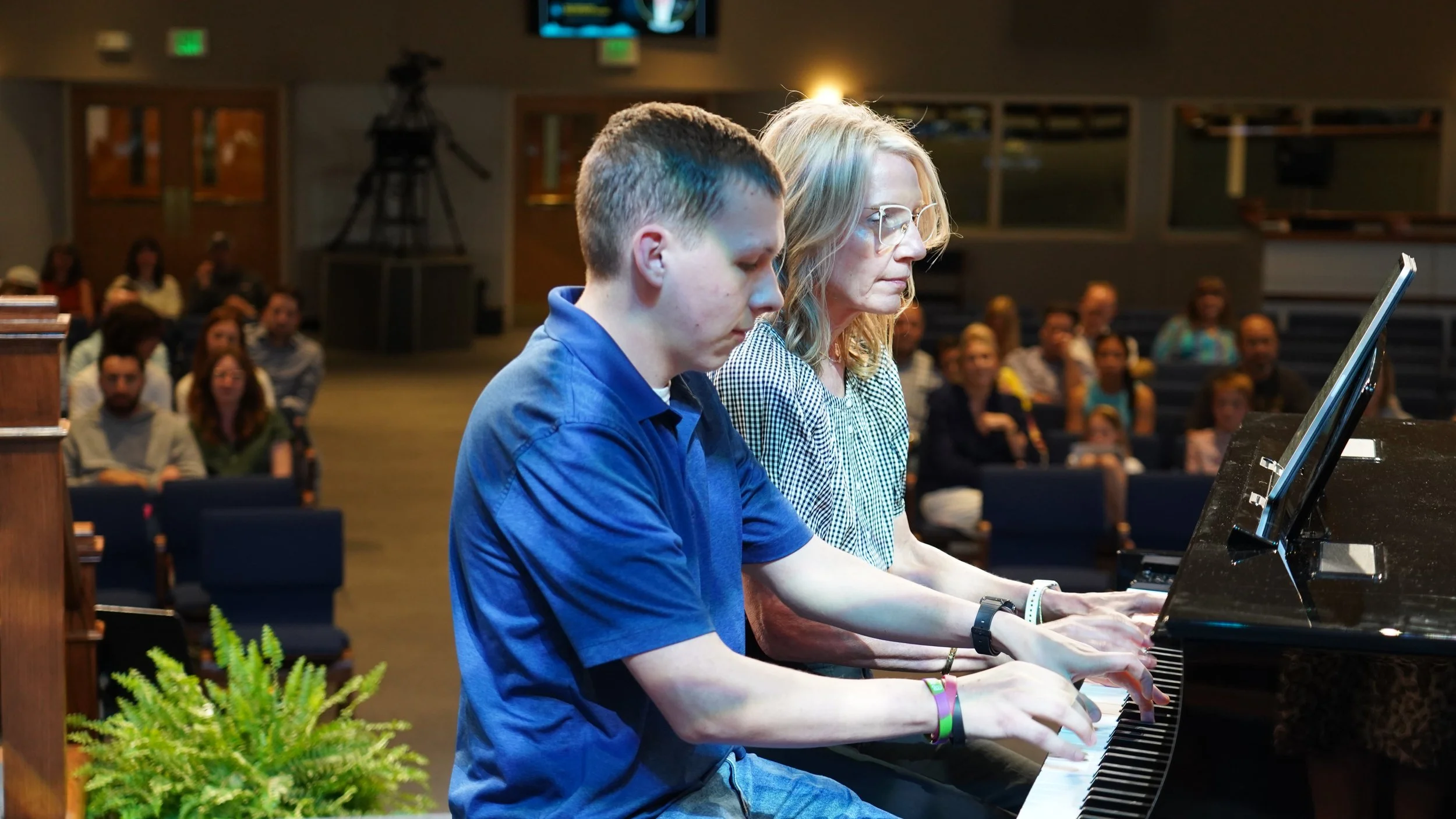
Photos from the recital that continued after the live band piano recital.
Will I do it again?
Most certainly, but maybe not every year. If it becomes a regular event, it may not feel “special.” There is a certain magic in the novelty of such a massive undertaking that keeps both the students and the audience on their toes. By spacing these events out, I can ensure that the "Rock the Stage" experience remains a highly anticipated milestone in my studio.
That said, if I could make the pay attractive enough to keep band members returning every year, why not? Finding professional musicians like Stuart, Ruben, and Alberto who are willing to mentor and support young pianists is a gift. Who can pass up a gig like this? If I can establish a sustainable financial model—perhaps by charging a participation fee for the families involved in the future—it could become a more frequent highlight of my contemporary piano teaching curriculum.
If you’re a piano teacher considering a modern piano recital or looking for creative piano recital ideas, I highly recommend giving students the opportunity to perform with a live band.
Moving beyond traditional sheet music to embrace chord charts and real-world music skills is transformative for a student’s development.
The experience will stretch their skills in active listening and rhythm, deepen their confidence, and drive home THE IDEA that music-making is even better together and meant to be shared.
Check out the Rock the Stage Band cover of “Don’t Stop Believin’.”
(The camera angle could have been better, but the guitar solo is worth a watch for sure!)
Six things I learned from hosting a piano recital with a live band
Choose reliable students and award this opportunity.
Excellent audio is essential.
One rehearsal CAN work.
Hire pros.
Students rise to the challenge.
This must have been a success, as the audience seemed to applaud louder and longer. Even a grandpa of one of the students came up to me to say how much he enjoyed it.
Photos capturing the audience’s reaction and my relief after the recital.

Have you hired a band before to play with your students?
What golden tips do you have?
PS Related resources: Pop Chord Playground Lab, How to Play Piano in a Band, Cupcake Improv, Space To Create.